



Blasting vs sanding a deck: where each one wins
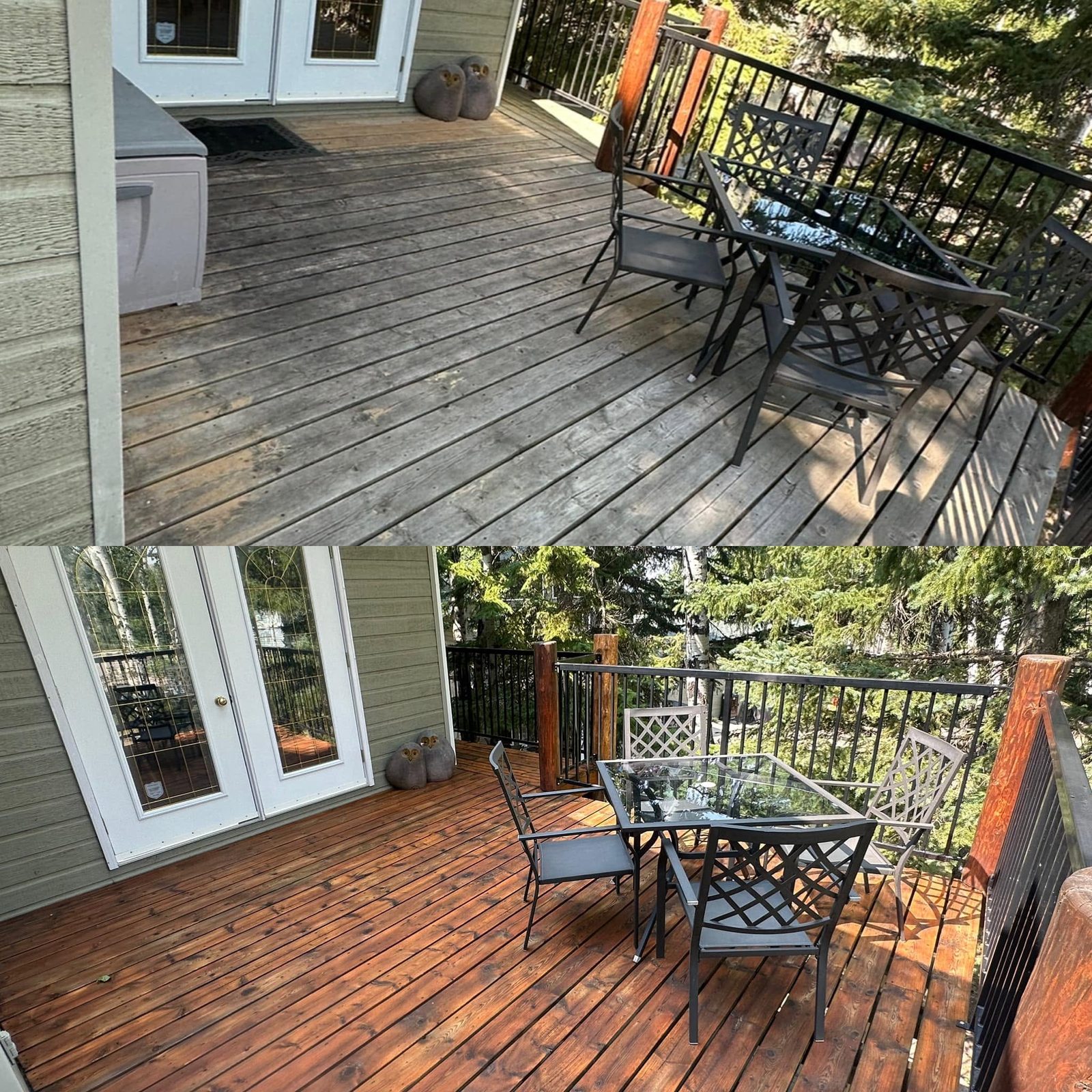
We are not going to pretend blasting is always the answer. On a small, simple, flat deck with no railing, a rented sander and a weekend is genuinely cheaper.
Where sanding works
- Small decks, simple rectangles, boards in good condition.
- No railings, or simple square balusters.
- You have the weekend and do not mind the dust.
Where sanding falls down
- Between the boards. A sander cannot get into the gaps, so old finish stays there and shows as dark lines through your new stain.
- Railings and balusters. This is where the labour explodes. Every spindle by hand.
- Against the house and around posts. Corners a disc will never reach.
- Cupped or rough boards. A sander rides the high points and skips the hollows.
What blasting does differently
Media follows the surface instead of riding it. It reaches the gaps, the balusters, the corners and the underside of the nosing at the same rate as the open field, so the take-off is even and the stain lands uniform.
The reason a refinished deck goes patchy in a season is almost always the parts the sander never touched.
It matters most on the older decks around Crescent Heights and Riverside, where there are usually several coats of history to get through and the boards are too thin to lose much to a sander.
Talk it through with Matt.
Call 403-702-4435 or text a photo of the job for a straight answer.
Fastest way to a number: text a photo of what needs blasting to 403-702-4435.
Keep reading.
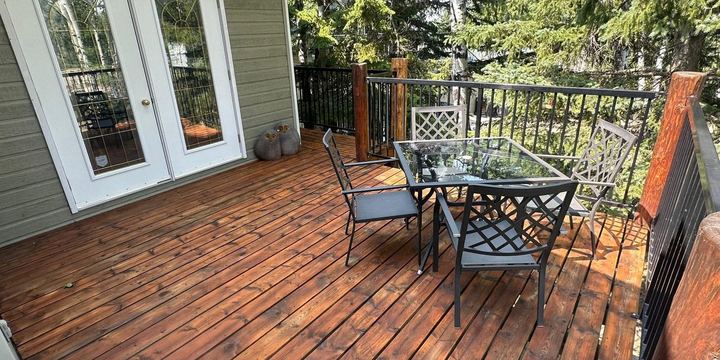
How often a deck needs refinishing in southeast Alberta sun
We get more sun than almost anywhere in Canada. What that does to a deck finish and a realistic cycle for horizontal surfaces.
Read it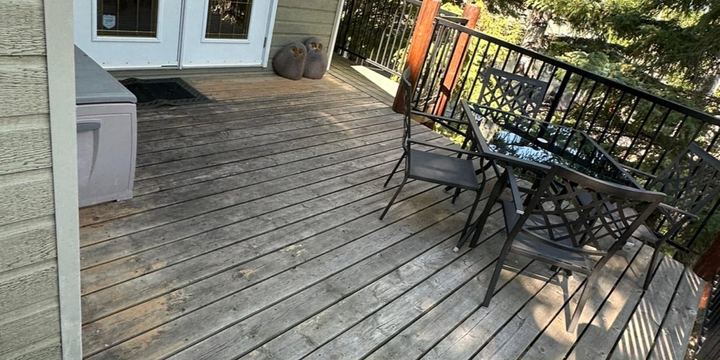
Cedar, pressure-treated and how each behaves under blasting
The two most common deck timbers strip very differently. What to expect from each and where the risks are.
Read it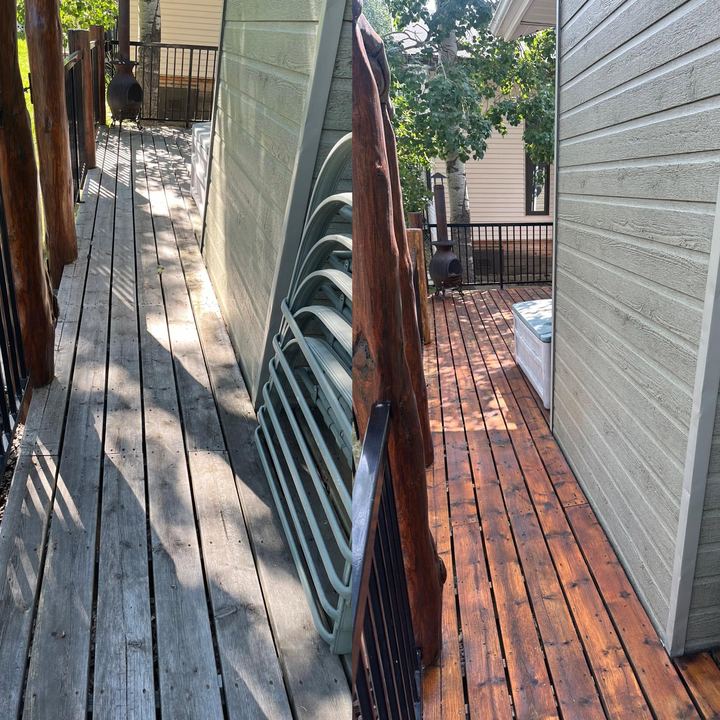
Is blasting a fence actually worth it?
Usually not, and we would rather say so. The cases where it is, and the cheaper alternatives for everything else.
Read it