

Grain bin exteriors: what maintenance actually buys you
Bins are galvanised and people assume that means permanent. Galvanising is sacrificial — it protects the steel by corroding first, and it does eventually run out.
Where corrosion shows up
- Structural legs and bases, particularly at grade and where water sits.
- Hopper cones, from the inside and at weld lines.
- Fasteners and seams, which are always the first galvanic weak point.
- Anywhere the coating has been physically damaged by equipment.
What preparation involves
Bin work is mostly about removing corrosion products and giving the coating a profile to key into. Galvanised surfaces that are still sound need a different approach from bare corroded steel, and treating them the same is how coatings fail on bins.
What is not worth doing
Blasting sound galvanising off a bin that is doing fine is removing protection you already paid for. If the coating is intact and the steel is clean, leave it.
Bin yards across Cypress County and out toward Bow Island, Foremost and Burdett take the full prairie wind with nothing to break it. Coatings on the exposed side of a bin here weather faster than the manufacturer's numbers assume.
Talk it through with Matt.
Call 403-702-4435 or text a photo of the job for a straight answer.
Fastest way to a number: text a photo of what needs blasting to 403-702-4435.
Keep reading.
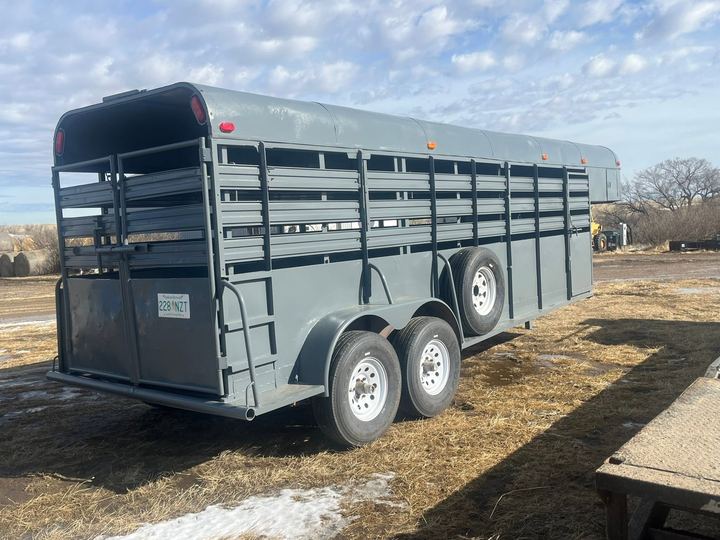
Stock trailer floors: where the rot actually starts
The outside looks fine for years while the floor and lower rails go. What blasting finds, and why it is better to find it early.
Read it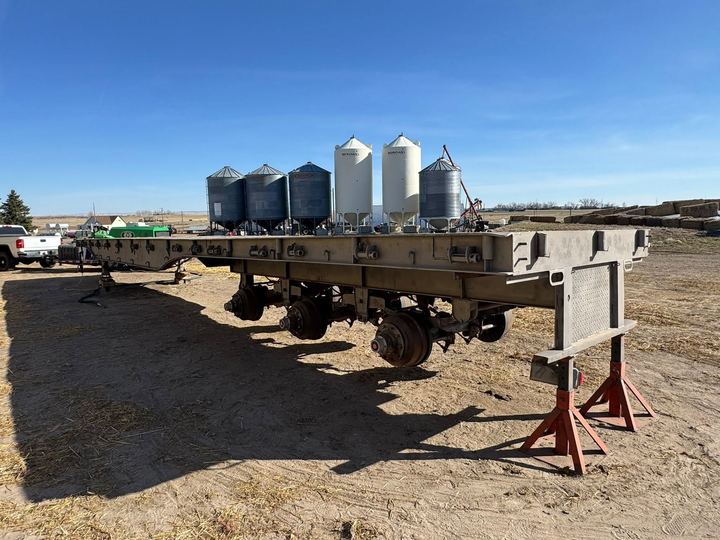
The best time to blast farm equipment is when it is parked
Freeze-up to seeding is the only window where stripping and repainting equipment costs you nothing in working days. Most operators miss it.
Read it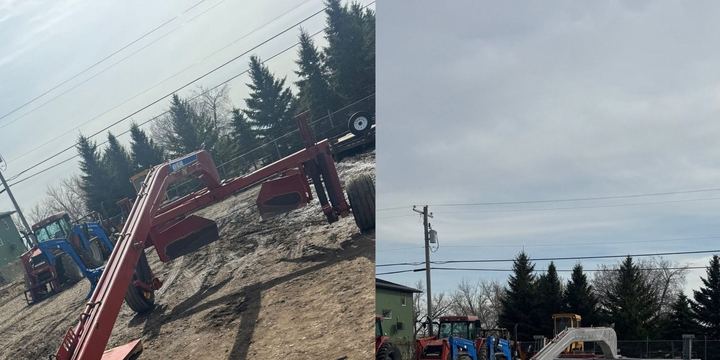
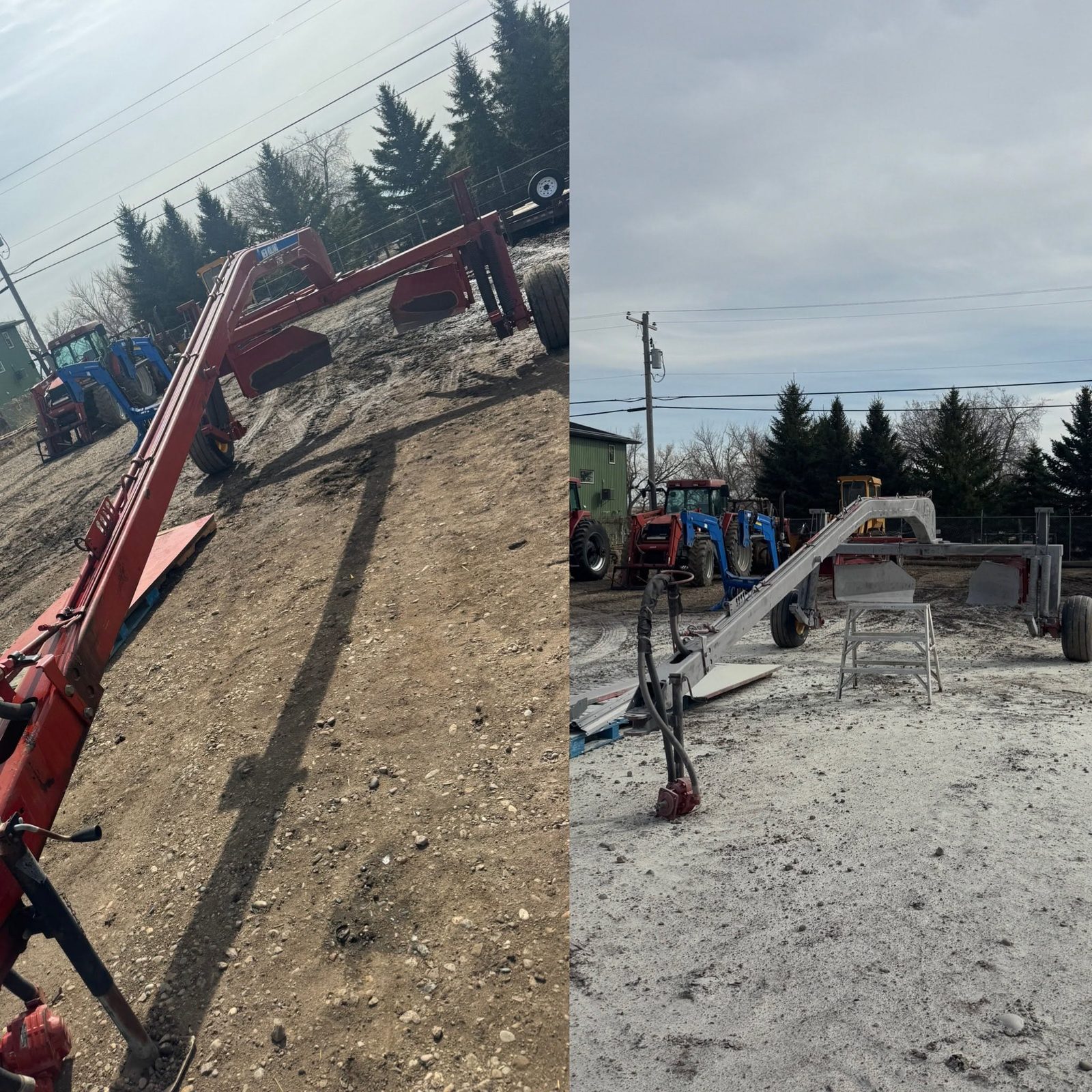
Prepping an auger or conveyor for repaint
Tubes, flighting and hoppers are awkward geometry full of places rust hides. What gets reached, what does not, and what to expect.
Read it