

Blasting vs pressure washing farm equipment
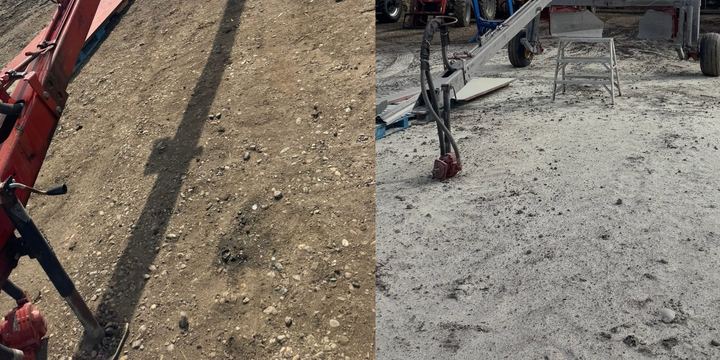
These get compared as if they are competing services. They are not. One removes what is sitting on the surface. The other removes the surface.
What a pressure washer removes
Dirt, product residue, loose material, mud, and coating that has already let go. That is genuinely useful and it is often all you need — particularly before storage or sale.
What it cannot do
- Remove bonded rust or mill scale.
- Remove sound but failing coating.
- Create any surface profile for a new coating to key into.
- Reach into pitting.
Where washing actively causes problems
High-pressure water drives moisture into seams and bearings, and on already-rusted steel it removes the loose surface without addressing what is underneath — so it looks improved and keeps corroding.
The right sequence
If a machine is being coated: wash first to get product and grease off, then blast. Blasting a greasy surface drives contamination into the profile and the coating fails on it.
Washing is often enough for equipment kept under cover on a yard near Medicine Hat. It is rarely enough for anything that has wintered outside on an open quarter toward Bow Island or Foremost.
Talk it through with Matt.
Call 403-702-4435 or text a photo of the job for a straight answer.
Fastest way to a number: text a photo of what needs blasting to 403-702-4435.
Keep reading.
Stock trailer floors: where the rot actually starts
The outside looks fine for years while the floor and lower rails go. What blasting finds, and why it is better to find it early.
Read it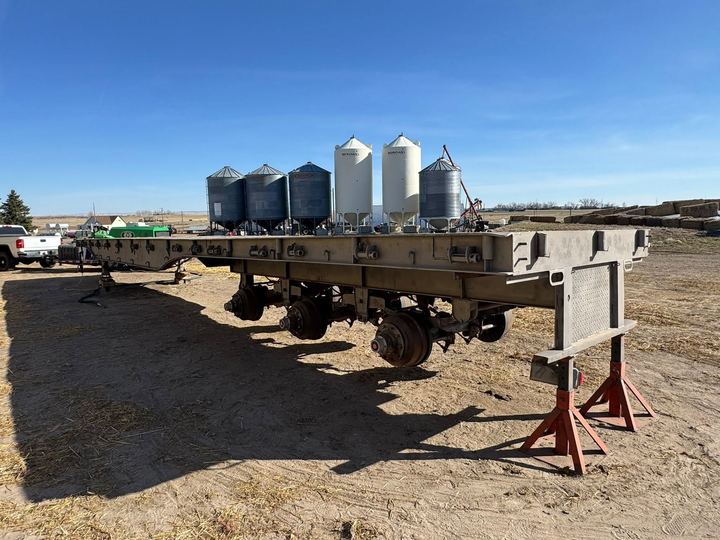
The best time to blast farm equipment is when it is parked
Freeze-up to seeding is the only window where stripping and repainting equipment costs you nothing in working days. Most operators miss it.
Read it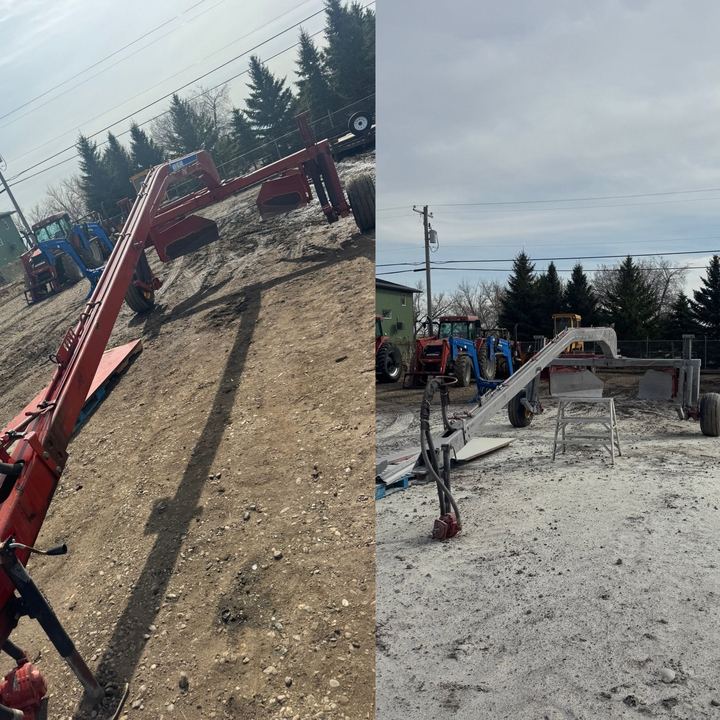
Grain bin exteriors: what maintenance actually buys you
Bin sheeting, legs and hoppers corrode quietly. What is worth preparing and coating, and what is better left alone.
Read it