



Do not blast composite decking
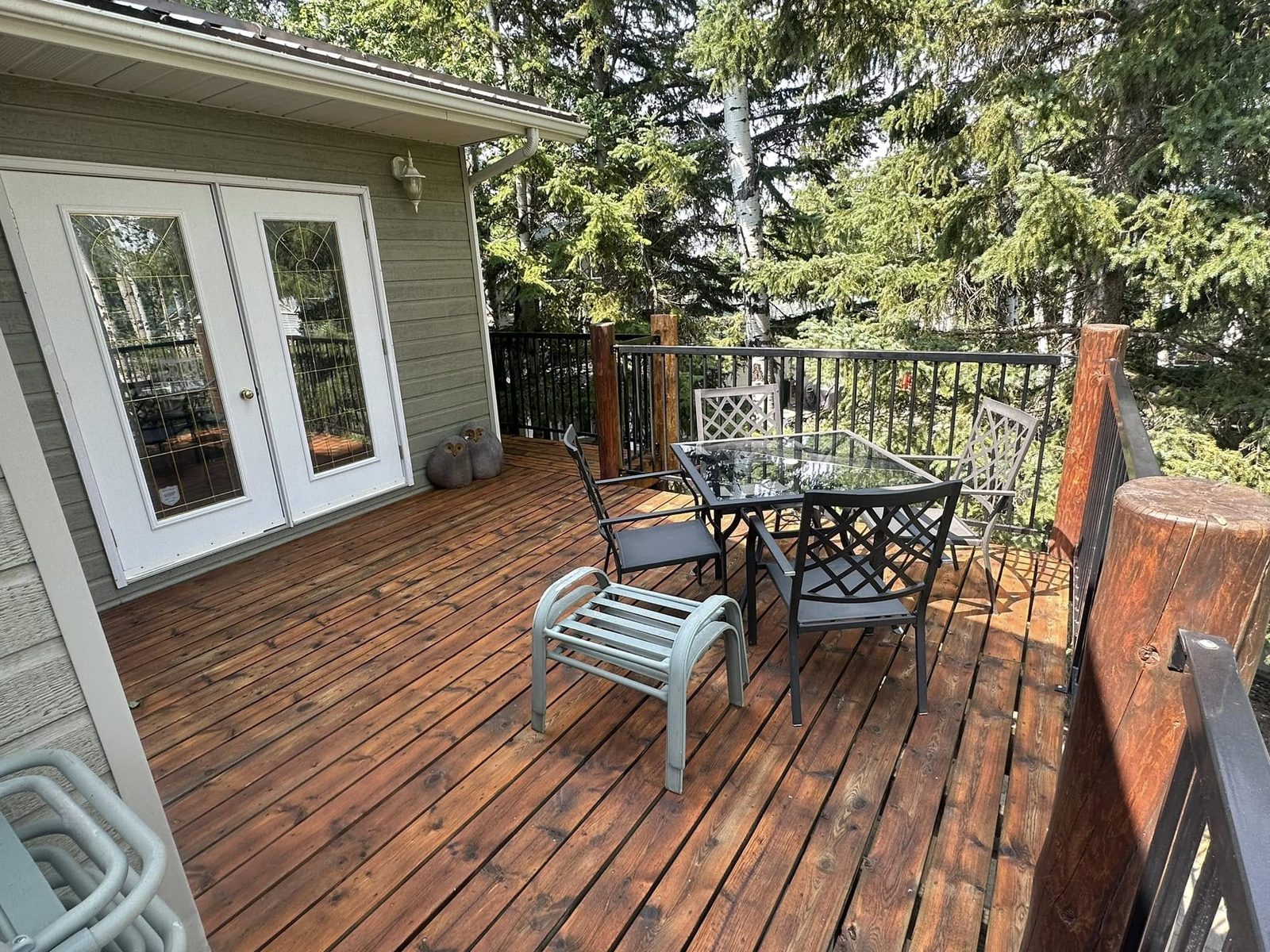
Composite decking is not wood and it does not behave like wood. Blasting it is a mistake that cannot be undone.
What happens
Composite boards have a manufactured surface — either a capped polymer layer or a moulded grain texture. Media removes that surface. What is underneath is a rough, porous core that looks nothing like the board did, stains permanently, and cannot be refinished because composite is not designed to take a coating.
How to tell what you have
- Composite is heavier than timber and has no end grain.
- The grain pattern repeats identically board to board.
- Cut ends show a uniform core rather than growth rings.
- It does not splinter.
What to do instead
Most tired composite responds to a proper wash with the manufacturer's recommended cleaner. Fading is usually UV and is not recoverable, but it is also not damage. Individual damaged boards can be swapped, which is far cheaper than any refinishing attempt.
Composite went in across most of the newer builds in Ross Glen, Southridge and Southview. If your deck is under about fifteen years old in those areas, check the material before anyone quotes you to strip it.
Talk it through with Matt.
Call 403-702-4435 or text a photo of the job for a straight answer.
Fastest way to a number: text a photo of what needs blasting to 403-702-4435.
Keep reading.
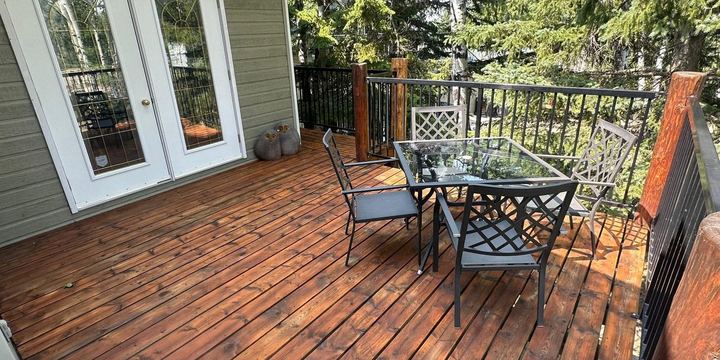
How often a deck needs refinishing in southeast Alberta sun
We get more sun than almost anywhere in Canada. What that does to a deck finish and a realistic cycle for horizontal surfaces.
Read it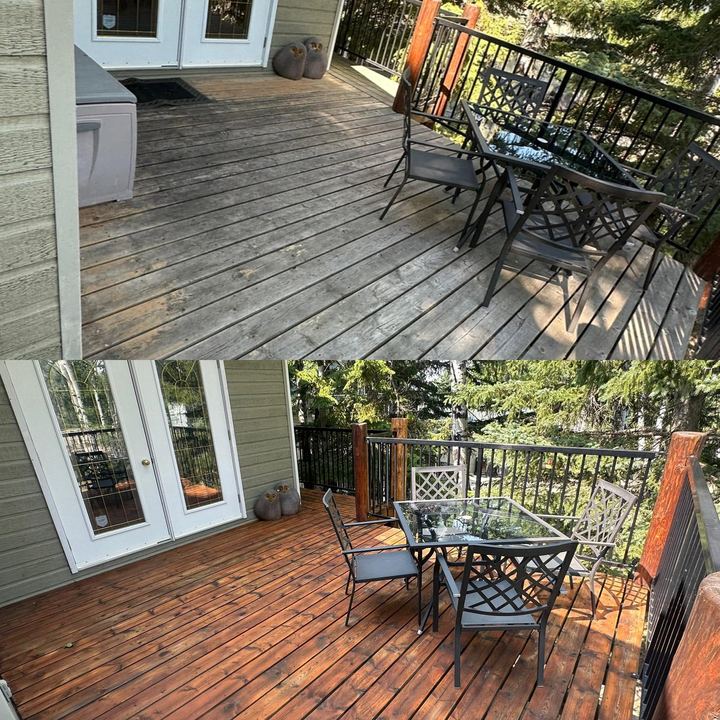
Blasting vs sanding a deck: where each one wins
Sanding is cheaper on a small flat deck. Everywhere else the geometry decides it. An honest comparison.
Read it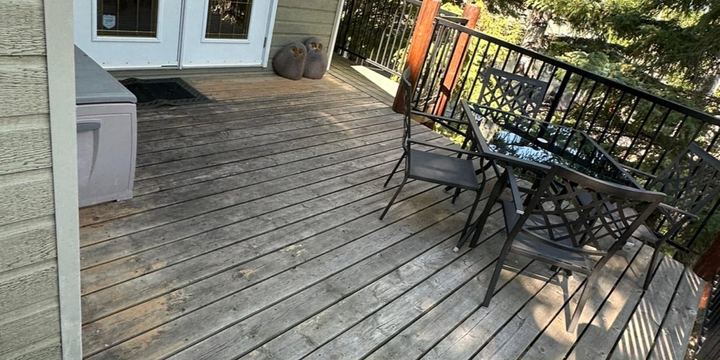
Cedar, pressure-treated and how each behaves under blasting
The two most common deck timbers strip very differently. What to expect from each and where the risks are.
Read it