

Why coatings fail on sprayer booms faster than anywhere else
Nothing on a farm destroys paint like a sprayer boom. It is worth understanding why before spending money coating one again.
Three forces at once
- Chemical exposure. Products, surfactants and cleanout solutions attack coatings directly.
- Flex. Booms move constantly. A rigid coating on a flexing substrate cracks at the stress points and lets water underneath.
- Thin wall. Boom tube is light. That means heat management during preparation actually matters — dry blasting a thin-wall section too hard will distort it.
What preparation should look like
Wet blasting at controlled pressure, because it cuts without building the friction heat that warps thin tube. Full removal of failed coating rather than feathering, because a partly bonded edge is where the next failure starts.
What to expect afterwards
Be realistic. A boom will never hold a coating like a frame rail does. The goal is arresting corrosion and getting several good seasons, not a permanent finish.
Sprayers working the sections around Bow Island, Foremost and Burdett fold and unfold thousands of times a season, and it is that flexing — not the chemical — that opens the coating at the joints.
Talk it through with Matt.
Call 403-702-4435 or text a photo of the job for a straight answer.
Fastest way to a number: text a photo of what needs blasting to 403-702-4435.
Keep reading.
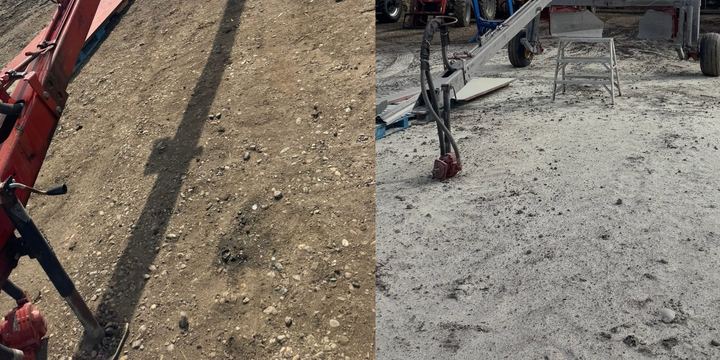
Stock trailer floors: where the rot actually starts
The outside looks fine for years while the floor and lower rails go. What blasting finds, and why it is better to find it early.
Read it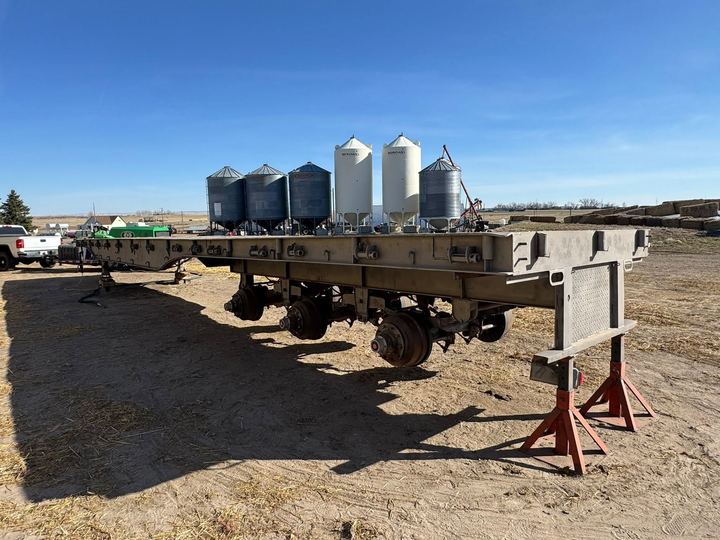
The best time to blast farm equipment is when it is parked
Freeze-up to seeding is the only window where stripping and repainting equipment costs you nothing in working days. Most operators miss it.
Read it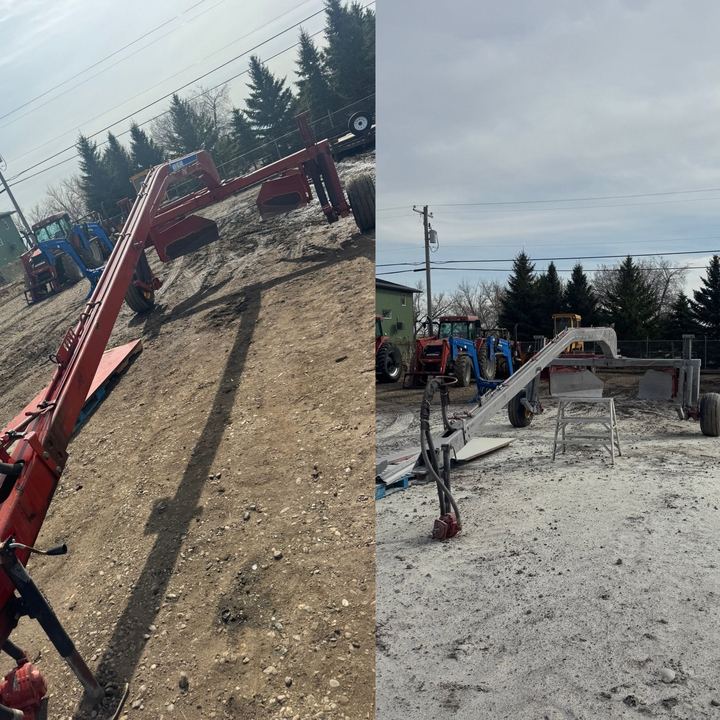
Grain bin exteriors: what maintenance actually buys you
Bin sheeting, legs and hoppers corrode quietly. What is worth preparing and coating, and what is better left alone.
Read it