


Can you blast a log home in winter?
People ask this every fall, usually hoping to use a quiet season. The honest answer is that the strip is the easy part.
The blast itself
Timber is dry blasted anyway, and dry blasting works in the cold, so the strip itself is not what stops a winter job. There is no water in the lines and nothing freezing on the wall.
What actually stops the job
- Stain will not cure. Almost every log finish has a minimum application temperature, and most want it holding overnight, not just at noon.
- Bare wood cannot sit open. A stripped wall left through a winter of freeze-thaw and blowing snow is worse off than the failing finish you removed.
- Daylight. A whole-house strip needs working hours, and December does not have them.
What does work in winter
Components we can take indoors. Doors, shutters, railings, furniture, and small timber elements can come to a heated space and go back in spring finished.
Elkwater and the Cypress Hills hold cold and snow well after the Medicine Hat valley has thawed, which in practice pushes most cabin work up there into the back half of spring even when town is already workable.
Talk it through with Matt.
Call 403-702-4435 or text a photo of the job for a straight answer.
Fastest way to a number: text a photo of what needs blasting to 403-702-4435.
Keep reading.
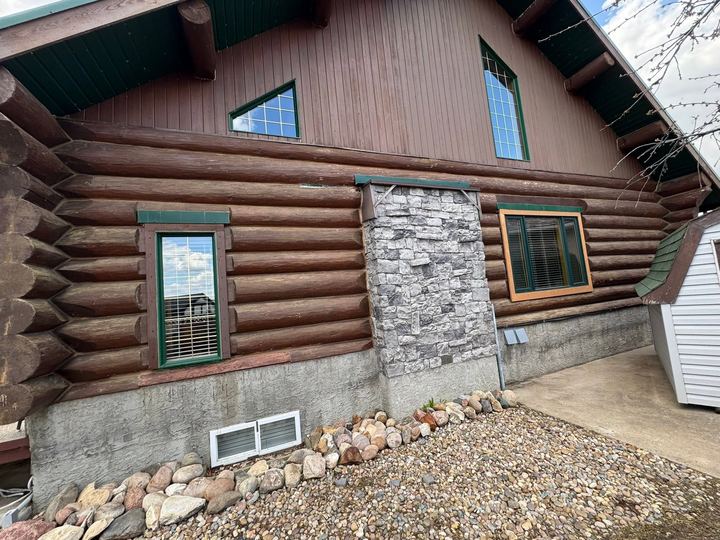
Why your log home went grey — and what stripping it actually involves
UV, not dirt, is what greys a log home. Here is what is really happening to the timber, why sanding disappoints, and how media blasting differs.
Read it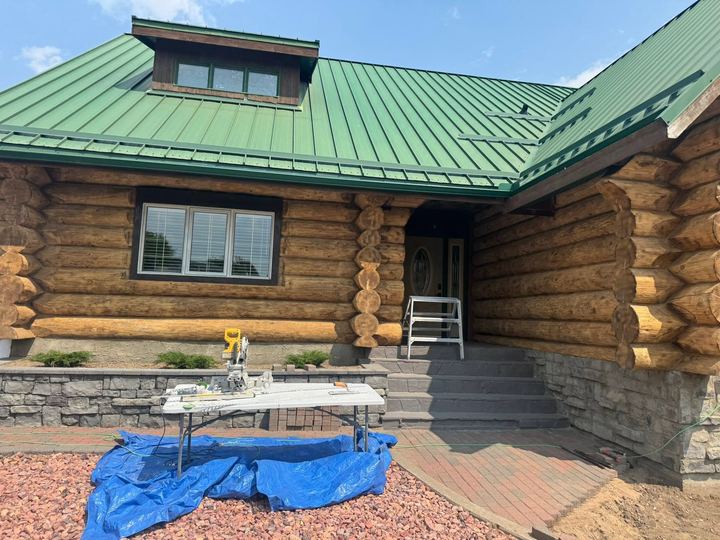
How often does a log home need re-staining in southern Alberta?
Our sun and wind are harder on a log wall than most of Canada. Here is a realistic cycle by elevation, and the signs that say do it now.
Read it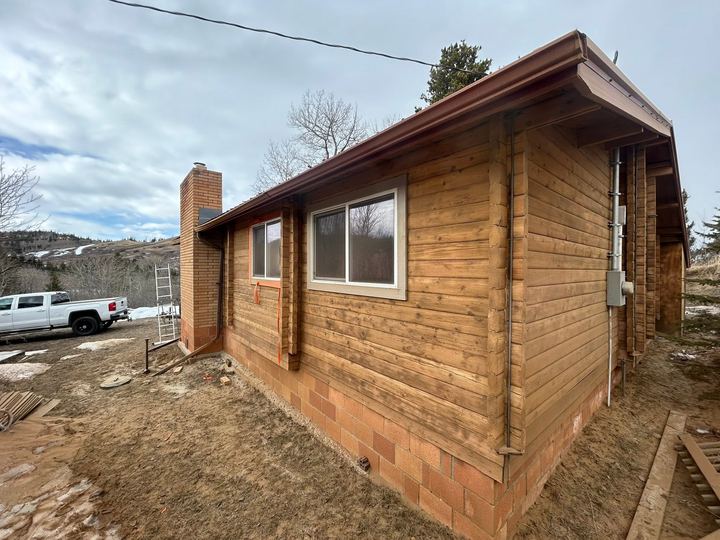
Chinking: what it does and when it has to be replaced
Chinking is the seal between your logs and the weather. Here is how to tell whether yours is tired, and how it interacts with a blast.
Read it