

Chinking: what it does and when it has to be replaced
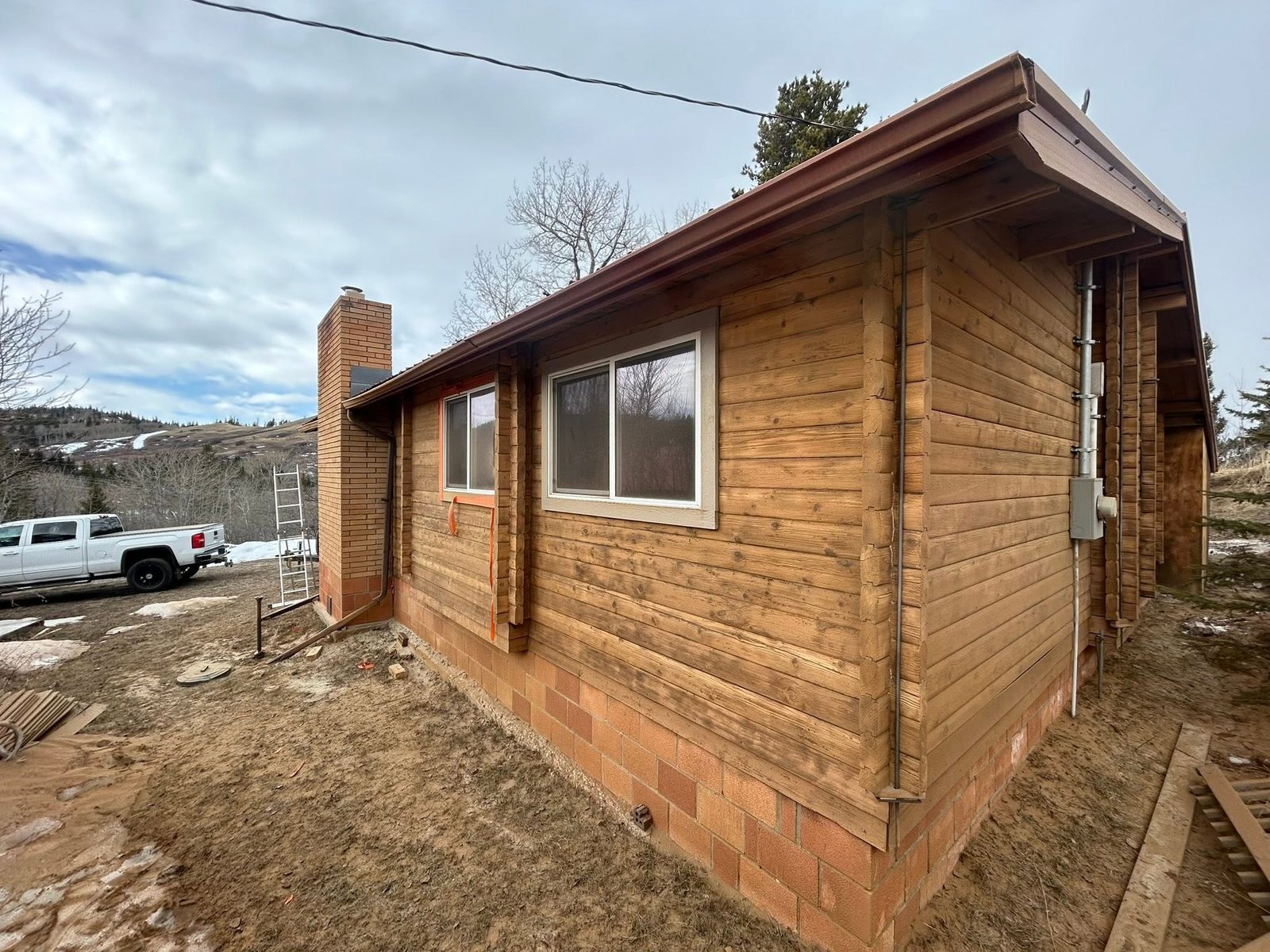
Chinking is the flexible seal that runs between log courses. It is not decorative. It is what keeps wind, water and insects out of the single largest joint in your house.
What failure looks like
- Separation. A visible gap where the chinking has pulled away from the log face.
- Cracking or crazing across the surface, usually on the sun-facing walls first.
- Chalking — a powdery residue on your hand when you touch it.
- Daylight or draft from inside, which means it has failed all the way through.
Why it fails
Logs move. They shrink as they dry, they swell with humidity, and the whole wall settles for years after it is built. Chinking is engineered to stretch with that movement. When it loses elasticity — from UV, age, or being applied too thin — it tears at the bond line instead of flexing.
Blasting and chinking together
If your chinking is sound, we mask and work around it. If it is failing, the sensible order is to blast first, then re-chink onto clean wood, then stain. Chinking bonds far better to a freshly stripped surface than to a weathered one carrying old finish.
Cabins around Elkwater and through the Cypress Hills take a harder freeze-thaw cycle than anything down in the Medicine Hat valley. More cycles a year means more movement in the joint, and chinking up there generally tires earlier than it does on a log home in town.
Talk it through with Matt.
Call 403-702-4435 or text a photo of the job for a straight answer.
Fastest way to a number: text a photo of what needs blasting to 403-702-4435.
Keep reading.
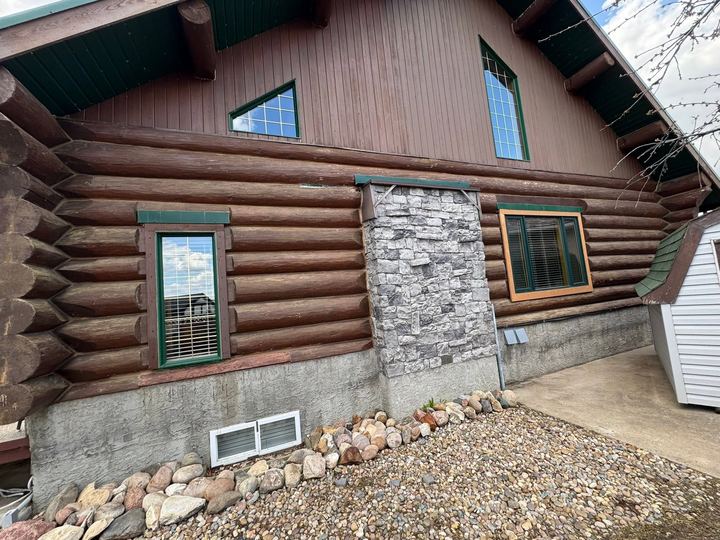
Why your log home went grey — and what stripping it actually involves
UV, not dirt, is what greys a log home. Here is what is really happening to the timber, why sanding disappoints, and how media blasting differs.
Read it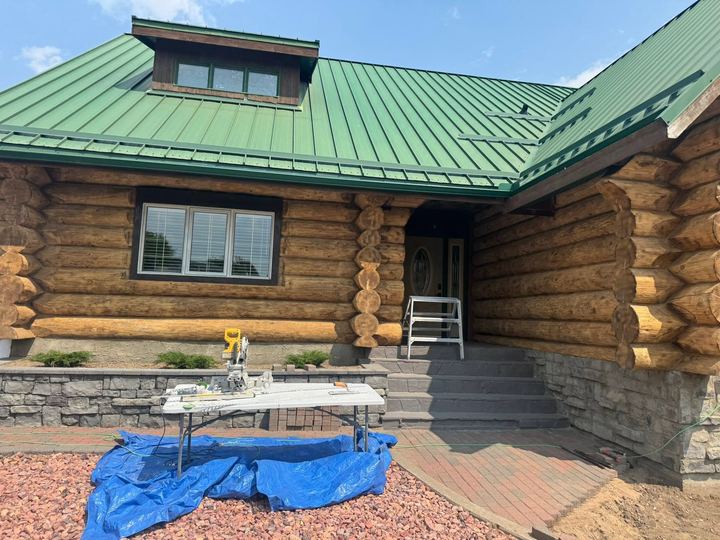
How often does a log home need re-staining in southern Alberta?
Our sun and wind are harder on a log wall than most of Canada. Here is a realistic cycle by elevation, and the signs that say do it now.
Read it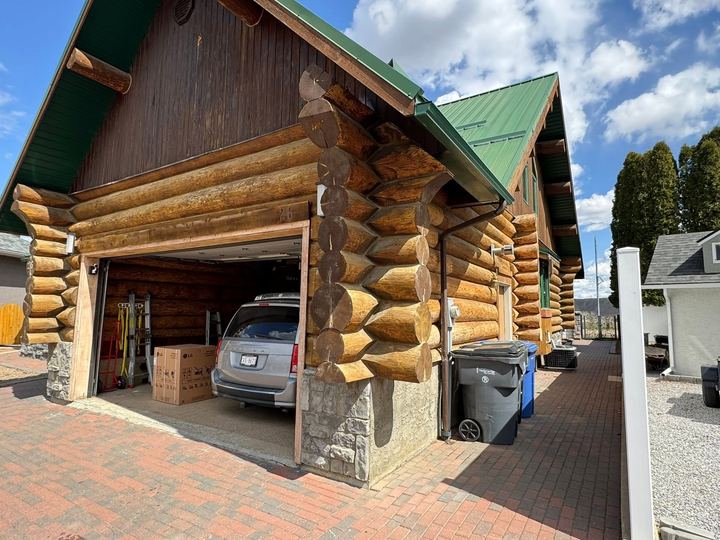
Choosing a stain for a freshly blasted log home
Bare logs will take almost anything, which is exactly the problem. Film vs penetrating, clear vs pigmented, and what our sun does to each.
Read it