

Choosing a stain for a freshly blasted log home
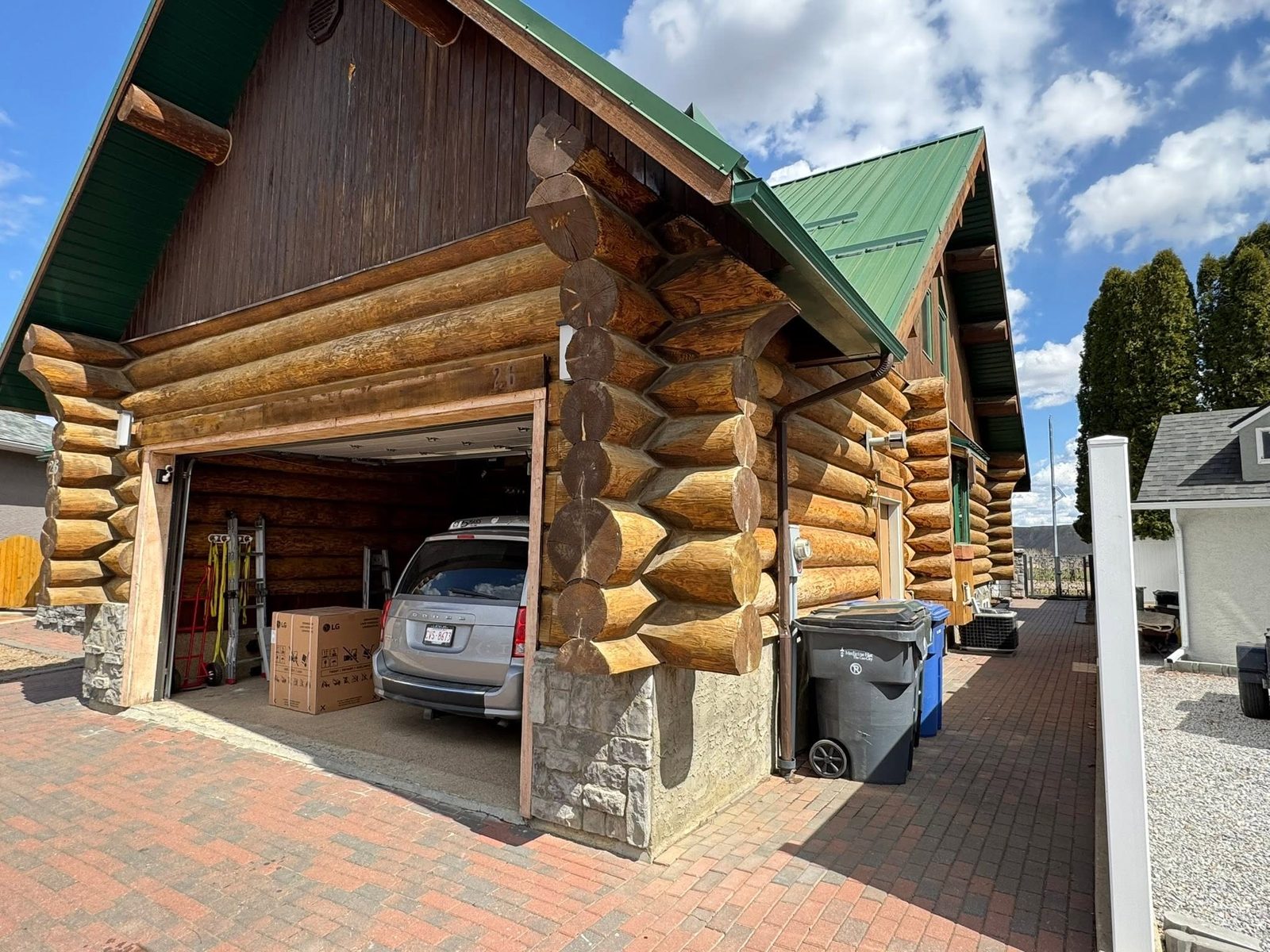
A stripped log wall is the most receptive surface it will ever be. That is an opportunity and a trap — it will accept a poor product as readily as a good one, and you will not know which you chose for three years.
Film-forming vs penetrating
Film formers sit on top and give you the deepest colour and the best water repellency. They also fail visibly — they flake, and when they do the whole wall has to come off again.
Penetrating oils soak in and weather back gradually rather than peeling. They need re-coating more often but maintenance is a wash-and-recoat rather than a strip.
Film gives you the better wall for five years. Penetrating gives you the easier wall for twenty.
Pigment is sunscreen
Clear finishes look wonderful for one summer. UV passes straight through them and greys the wood underneath, and then you are stripping a house that still looks freshly finished from thirty feet. In our sun, some pigment is not a style choice — it is the only thing protecting the lignin.
Timing after the blast
Bare logs need to be dry before finish goes on, and they need to be sealed before they start weathering again. In practice that means a few dry days between blast and stain, not a few weeks.
Exposure varies more across this area than people expect. A stain that holds five years on a sheltered lot in Crescent Heights can chalk in three on an open hillside above Elkwater Lake, where there is nothing between the wall and the wind.
Talk it through with Matt.
Call 403-702-4435 or text a photo of the job for a straight answer.
Fastest way to a number: text a photo of what needs blasting to 403-702-4435.
Keep reading.
Why your log home went grey — and what stripping it actually involves
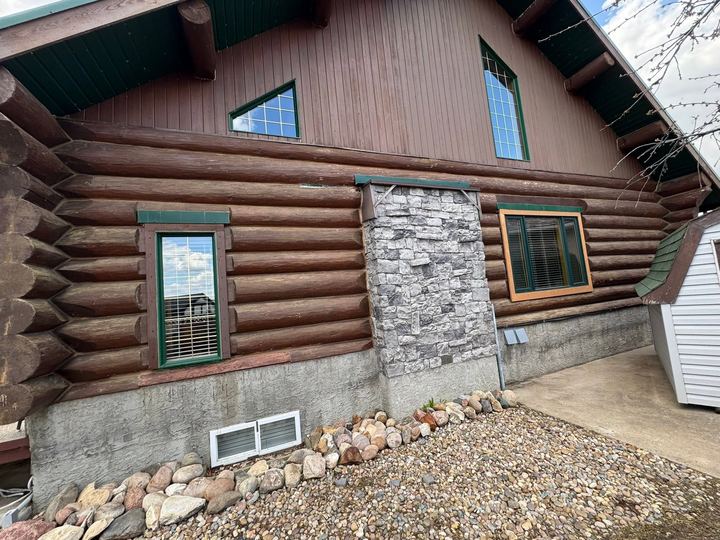
UV, not dirt, is what greys a log home. Here is what is really happening to the timber, why sanding disappoints, and how media blasting differs.
Read it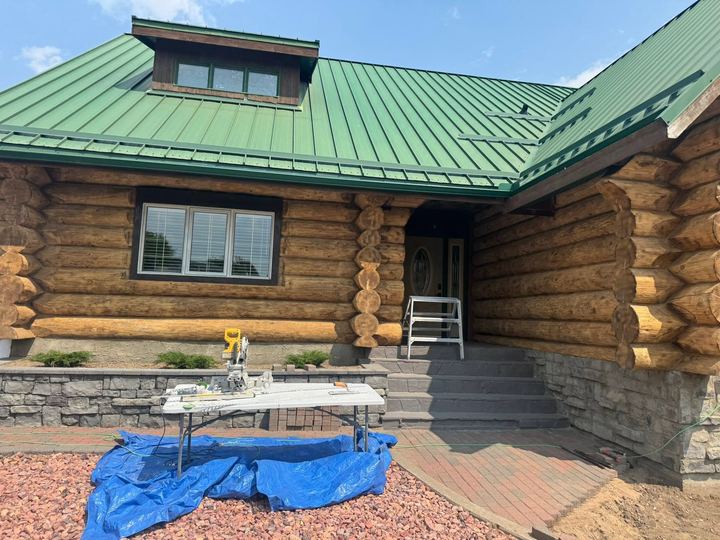
How often does a log home need re-staining in southern Alberta?
Our sun and wind are harder on a log wall than most of Canada. Here is a realistic cycle by elevation, and the signs that say do it now.
Read it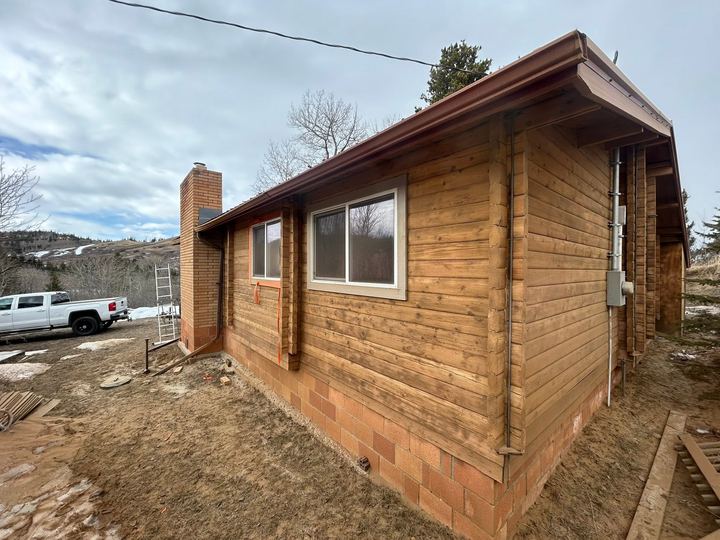
Chinking: what it does and when it has to be replaced
Chinking is the seal between your logs and the weather. Here is how to tell whether yours is tired, and how it interacts with a blast.
Read it