

Crushed glass, walnut shell or soda: choosing media for wood
On steel the media choice affects speed. On wood it decides whether the job is a success or a permanent mistake.
Recycled crushed glass
Our default for log and timber work. Silica-free, angular enough to cut stain and paint efficiently, and light enough that at low pressure it lifts the finish without carving the soft spring growth. It is also the most economical option, which matters on a whole-house job.
Crushed walnut shell
Softer and gentler. The right answer for carved work, ornate detail, very old timber, or anywhere the surface texture is part of what you are preserving. Slower and more expensive, so it is usually a targeted choice rather than a whole-wall one.
Soda
Very mild, good for mould, mildew and light coatings. It gets recommended online more than it deserves for stain removal — the results are inconsistent, and residual soda can interfere with some finishes if it is not neutralised properly. It is not our default.
The media is only half the decision. The same crushed glass at the wrong pressure will still ruin a wall.
Pressure is the other half
Wood work runs at a fraction of the pressure we would use on structural steel. We test an inconspicuous section on every house, check the take-off rate and the grain condition, then set the wall.
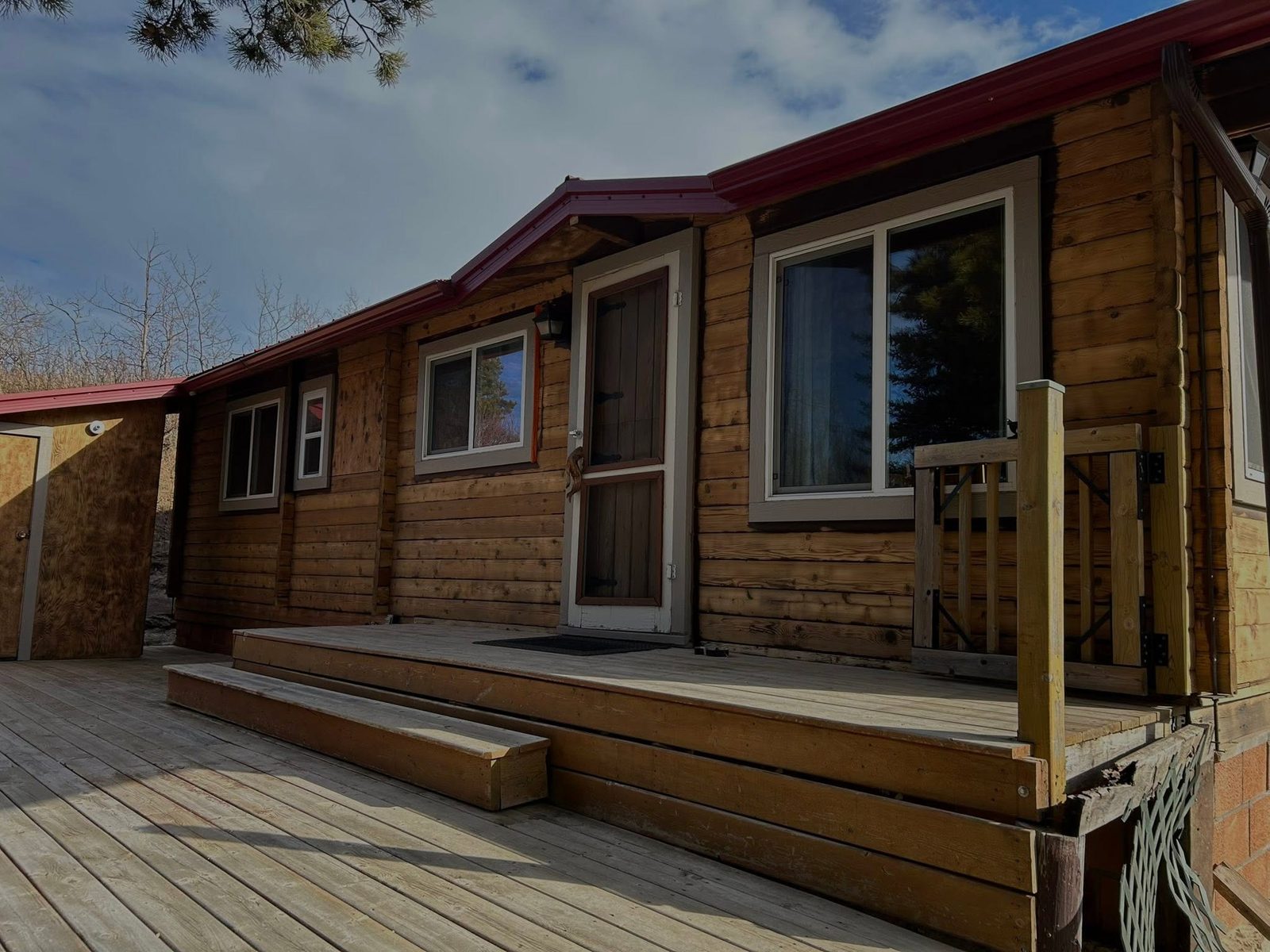
The softwood on the newer cabins around Elkwater takes a lighter hand than the older, harder timber on some of the farmhouses out toward Irvine and Walsh. Same machine, different media and pressure.
Talk it through with Matt.
Call 403-702-4435 or text a photo of the job for a straight answer.
Fastest way to a number: text a photo of what needs blasting to 403-702-4435.
Keep reading.
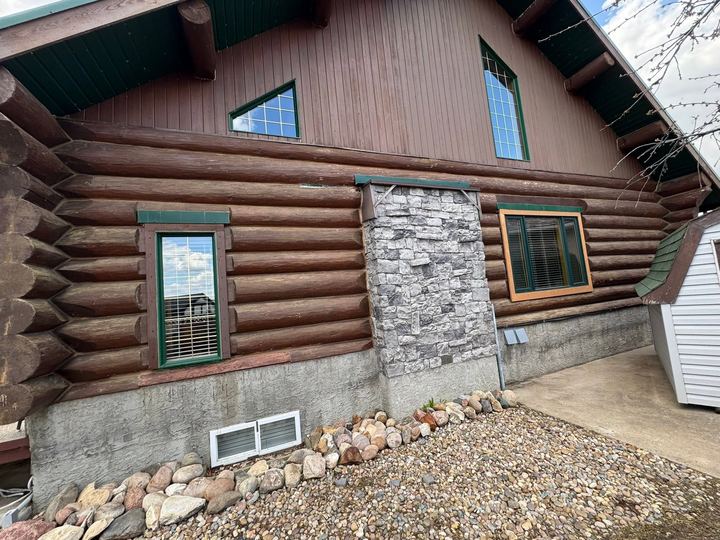
Why your log home went grey — and what stripping it actually involves
UV, not dirt, is what greys a log home. Here is what is really happening to the timber, why sanding disappoints, and how media blasting differs.
Read it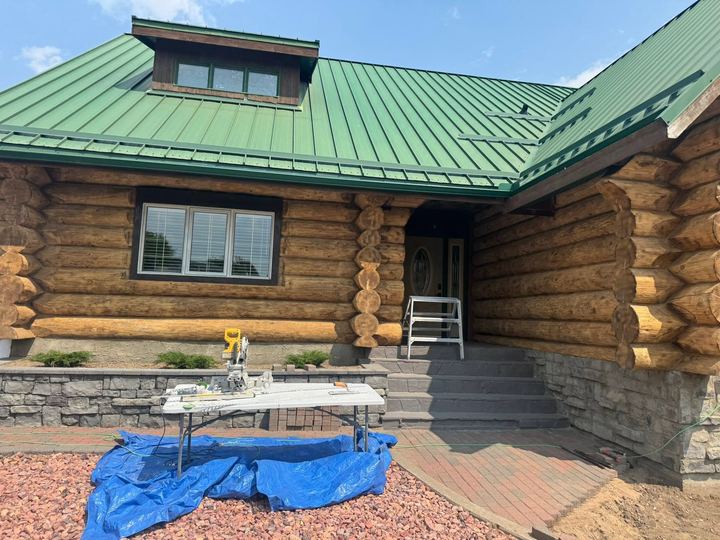
How often does a log home need re-staining in southern Alberta?
Our sun and wind are harder on a log wall than most of Canada. Here is a realistic cycle by elevation, and the signs that say do it now.
Read it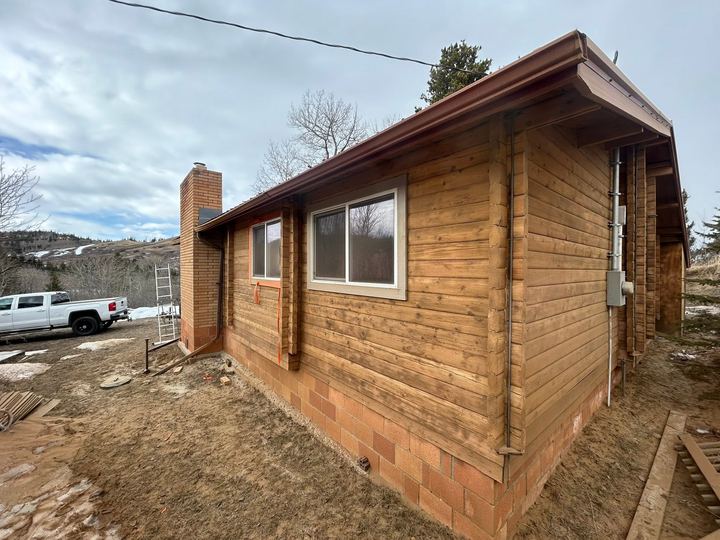
Chinking: what it does and when it has to be replaced
Chinking is the seal between your logs and the weather. Here is how to tell whether yours is tired, and how it interacts with a blast.
Read it