

Borate treatment: the step people skip after stripping
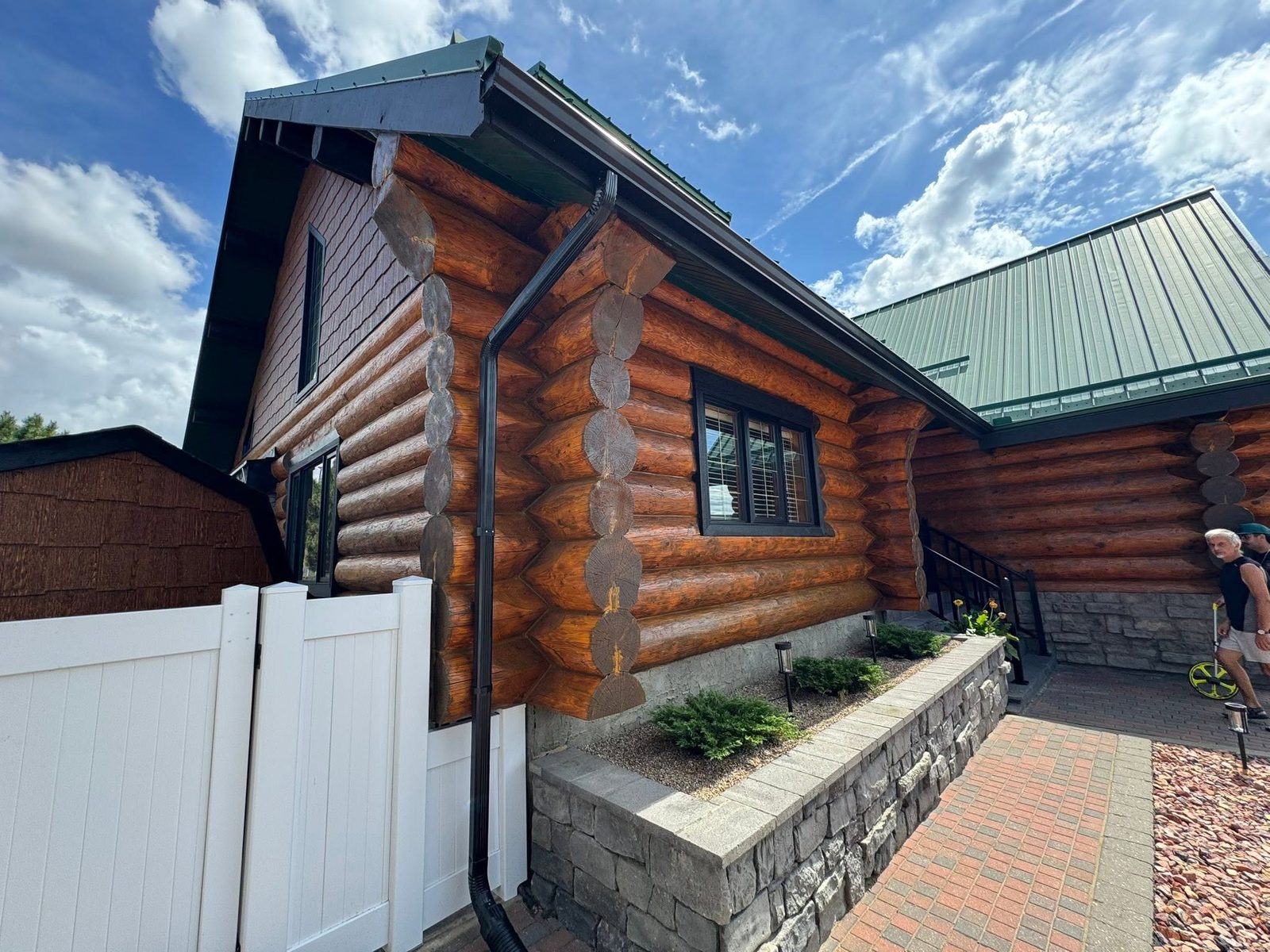
Once a log home is stripped, there is a short window where the wood is bare, open and able to absorb a treatment properly. It is the only practical time to protect the timber itself rather than just coating it.
What borates do
Borate solutions penetrate into the wood and make it unpalatable to decay fungi and wood-boring insects. They do not form a film and they do not change how stain behaves. They treat the substrate, not the surface.
When they are worth it
- Any log within splash range of grade or a deck.
- Walls that have had a failing finish for several seasons and stayed damp.
- Homes with any history of carpenter ants or beetle activity.
- North elevations that dry slowly.
Sequence matters
Borates go on bare, dry wood after blasting and before stain. They need time to absorb and dry. Applied over a finish they do nothing at all, which is why the strip is the moment to decide.
It is worth more on the timber near the treeline in the Cypress Hills, where moisture content stays higher for longer, than it is on the dry open prairie out around Irvine and Walsh.
Talk it through with Matt.
Call 403-702-4435 or text a photo of the job for a straight answer.
Fastest way to a number: text a photo of what needs blasting to 403-702-4435.
Keep reading.
Why your log home went grey — and what stripping it actually involves
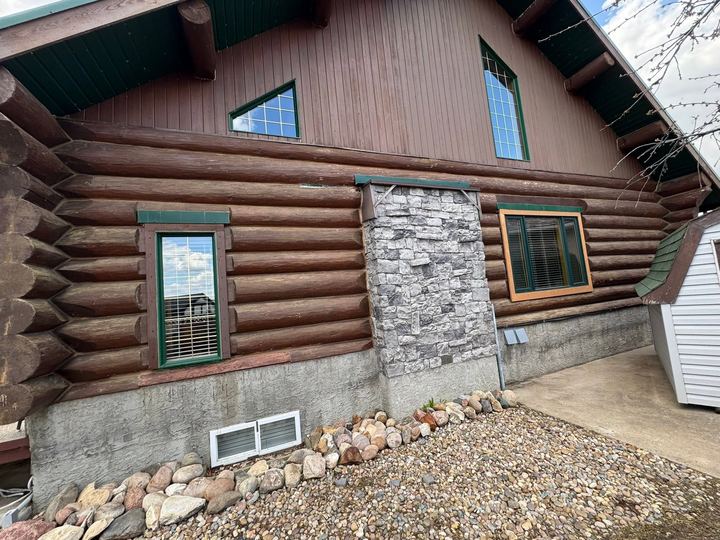
UV, not dirt, is what greys a log home. Here is what is really happening to the timber, why sanding disappoints, and how media blasting differs.
Read it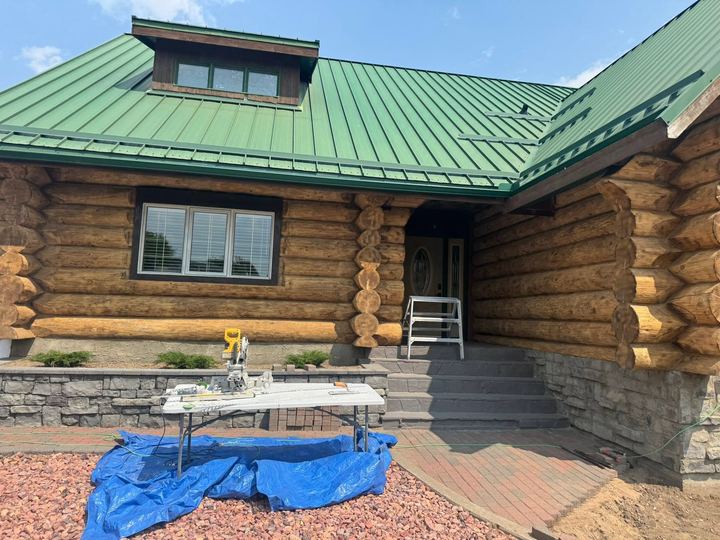
How often does a log home need re-staining in southern Alberta?
Our sun and wind are harder on a log wall than most of Canada. Here is a realistic cycle by elevation, and the signs that say do it now.
Read it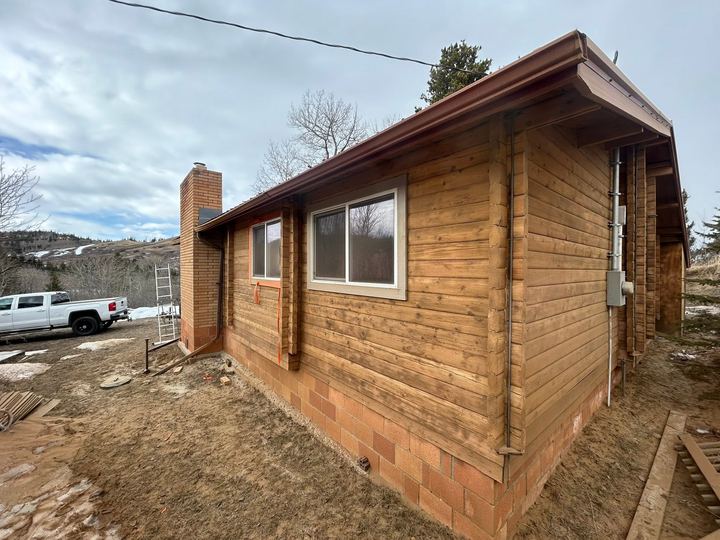
Chinking: what it does and when it has to be replaced
Chinking is the seal between your logs and the weather. Here is how to tell whether yours is tired, and how it interacts with a blast.
Read it