


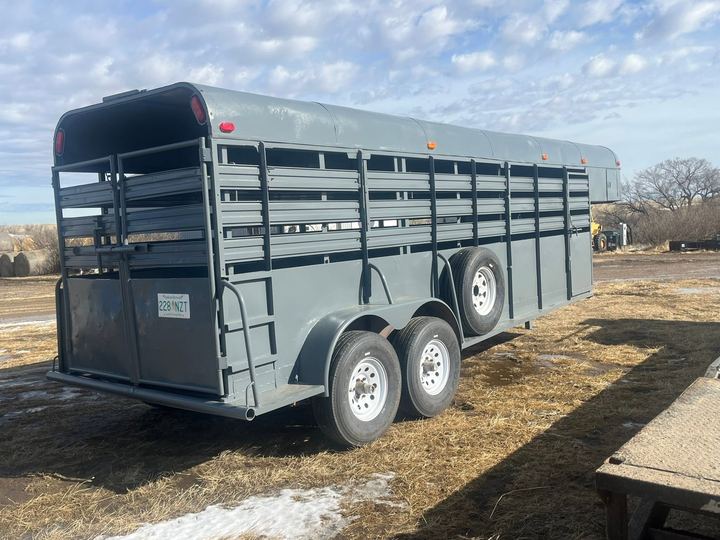
Cracks have to be dealt with before sealer, not under it
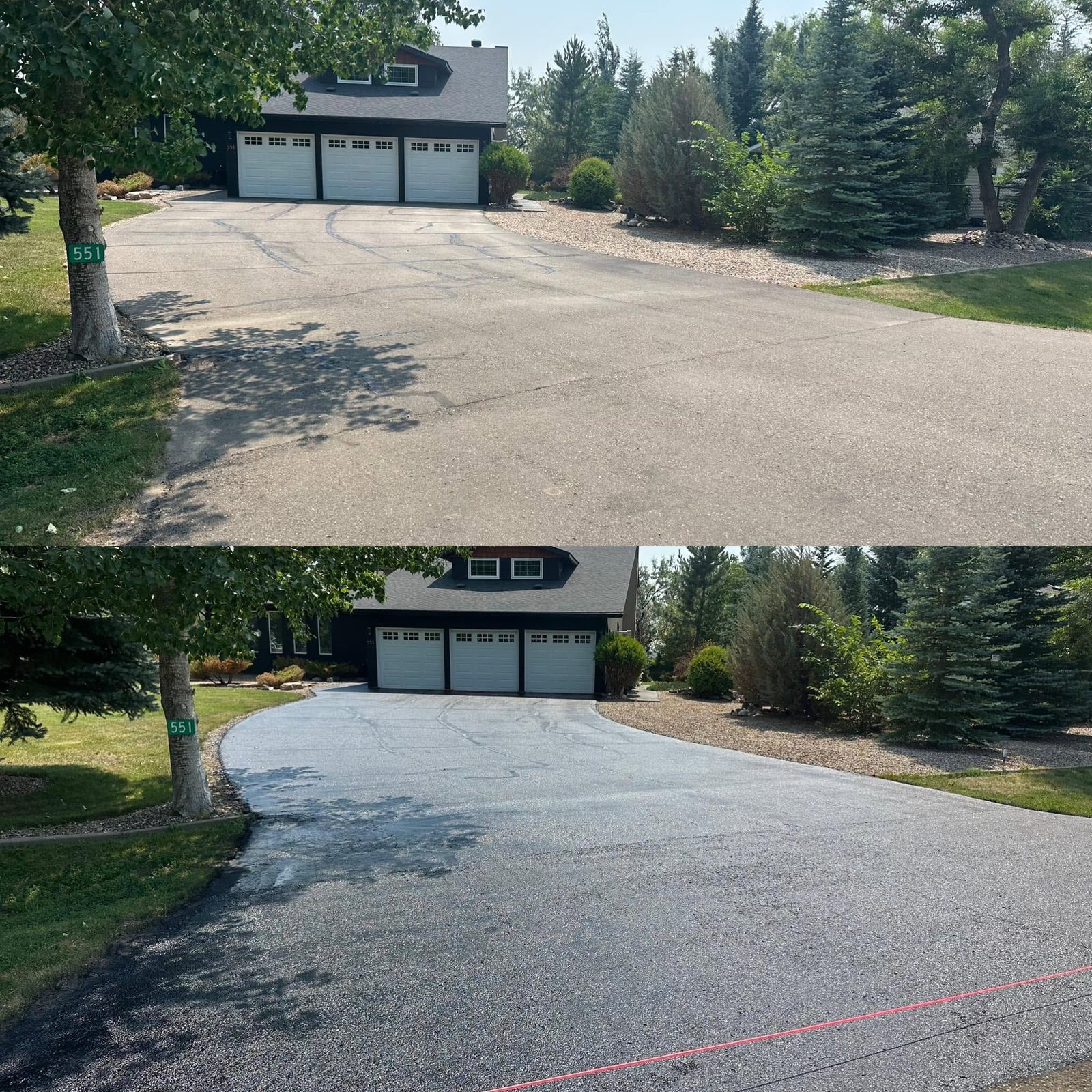
Sealcoat is thin. It is a surface treatment measured in fractions of a millimetre, and it will not bridge a crack.
What happens if you seal over cracks
The sealer spans the opening briefly, then cracks along the same line within weeks. Meanwhile water still enters, and now you cannot see where it is going because everything is uniformly black. The crack keeps working underneath while the lot looks fine.
The right order
- Clean. Vegetation and debris out of every crack, and the surface swept properly.
- Fill. Appropriate crack filler, sized to the opening.
- Cure. Filler needs time before anything goes over it.
- Seal.
Which cracks are worth filling
Linear cracks up to roughly a centimetre respond well. Wider than that needs routing first. Alligator cracking is not a crack-filling problem — it is base failure, and filling it wastes the material.
Freeze-thaw across the Medicine Hat area opens cracks every spring. Sealing over them in Ross Glen or Southridge without filling first just puts a skin over a problem that keeps growing underneath.
Talk it through with Matt.
Call 403-702-4435 or text a photo of the job for a straight answer.
Fastest way to a number: text a photo of what needs blasting to 403-702-4435.
Keep reading.
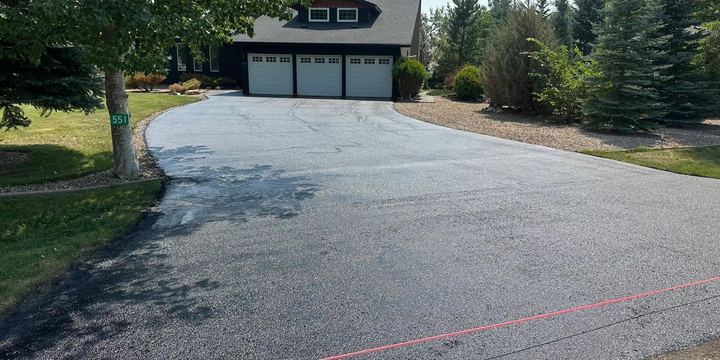
Why asphalt turns grey, and what sealing actually does
The colour is a symptom of binder loss. What that means for the life of your driveway and when sealing is worth the money.
Read it
A maintenance schedule for a commercial lot
Lots fail slowly then suddenly. A realistic cycle that keeps a lot out of the replacement conversation.
Read it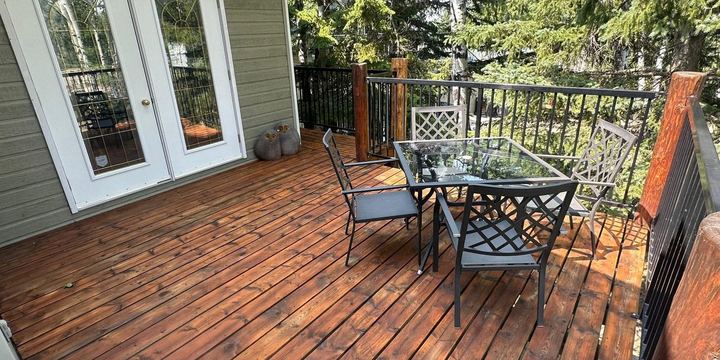
How often a deck needs refinishing in southeast Alberta sun
We get more sun than almost anywhere in Canada. What that does to a deck finish and a realistic cycle for horizontal surfaces.
Read it