



Why asphalt turns grey, and what sealing actually does
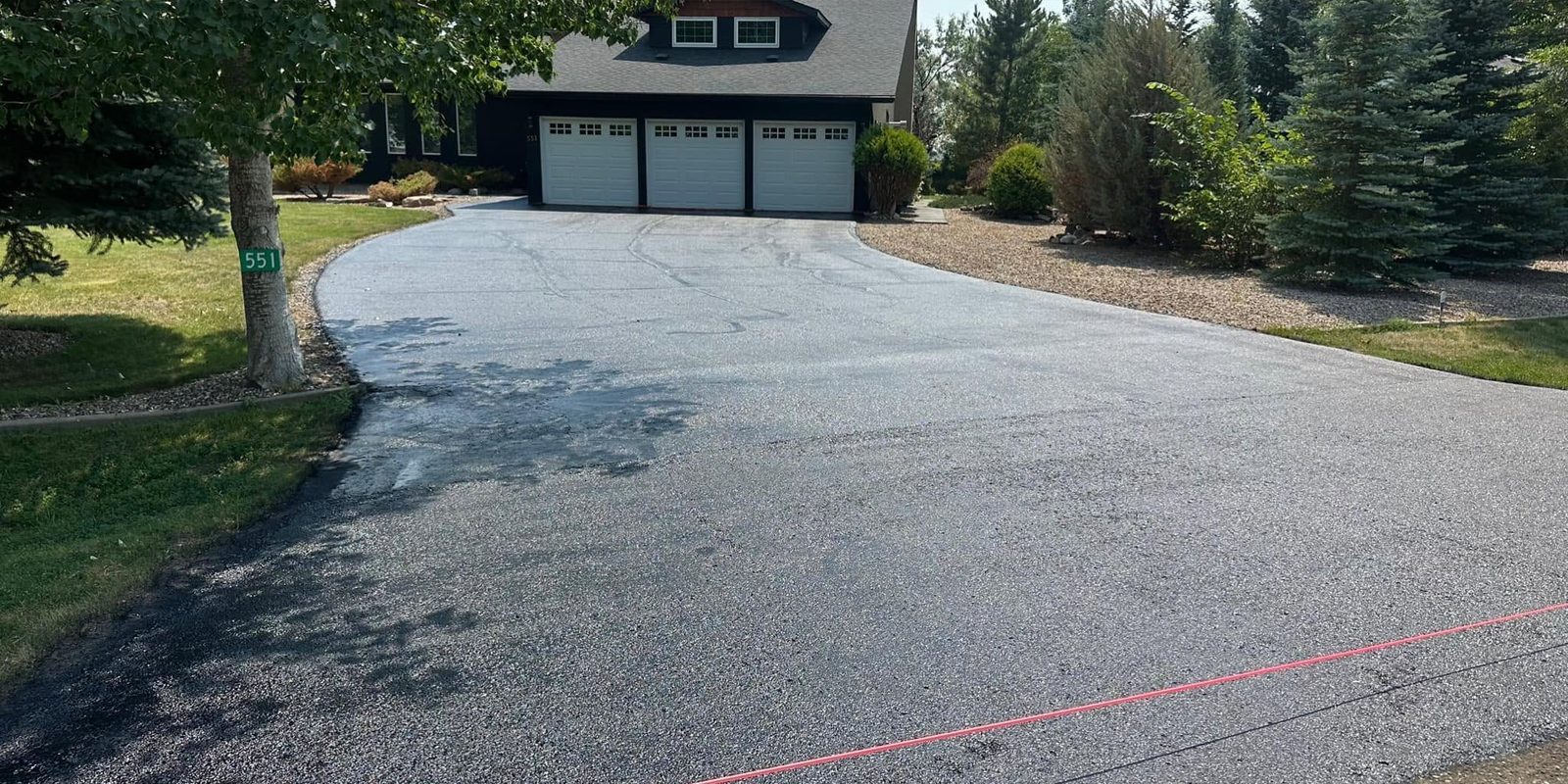
New asphalt is black because of the bitumen binding the aggregate together. Grey asphalt is asphalt that has lost binder at the surface.
The failure sequence
- UV and oxygen break down the binder at the surface.
- The surface fades and starts releasing loose stone.
- Water penetrates between the aggregate instead of running off.
- Freeze-thaw expands that water and breaks the surface apart.
- Cracks connect, water reaches the base, and the failure becomes structural.
What sealing does
It replaces the protective layer at the surface — blocking UV, resisting water penetration, and resisting fuel and oil. It slows the sequence above. It does not reverse damage that has already happened.
When it is worth doing
- Surface is faded but sound, with no significant cracking.
- Cracks are present but narrow and not interconnected.
- The lot or driveway is under about fifteen years old and structurally fine.
When it is not
Alligator cracking, potholes, soft spots or visible base failure. Sealing those is cosmetic — the money is better spent on patching or an overlay.
Southeast Alberta gets more annual sunshine than almost anywhere in the country, and that UV load is why driveways around Medicine Hat, Redcliff and Dunmore go grey faster than the same asphalt would further north.
Talk it through with Matt.
Call 403-702-4435 or text a photo of the job for a straight answer.
Fastest way to a number: text a photo of what needs blasting to 403-702-4435.
Keep reading.
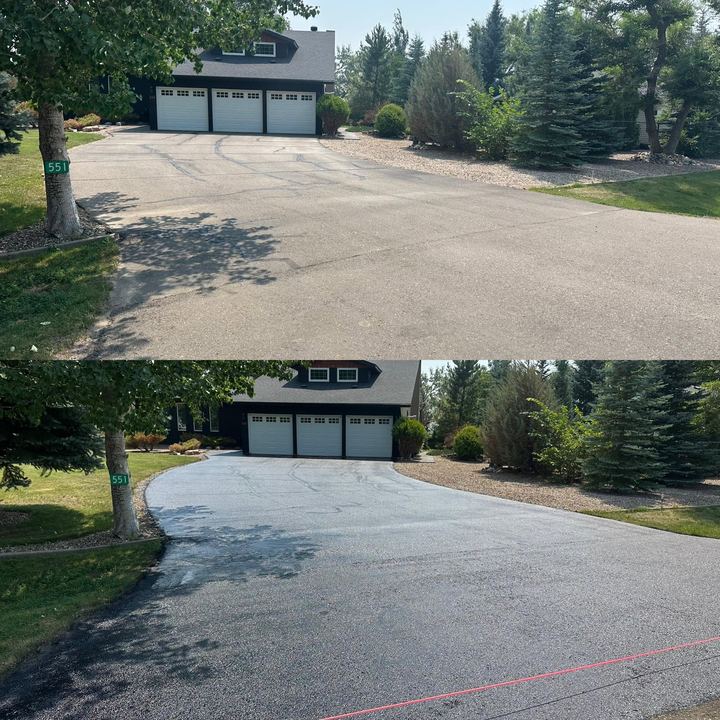
Cracks have to be dealt with before sealer, not under it
Sealer is not a crack filler. What happens when you seal over open cracks and the right order of operations.
Read it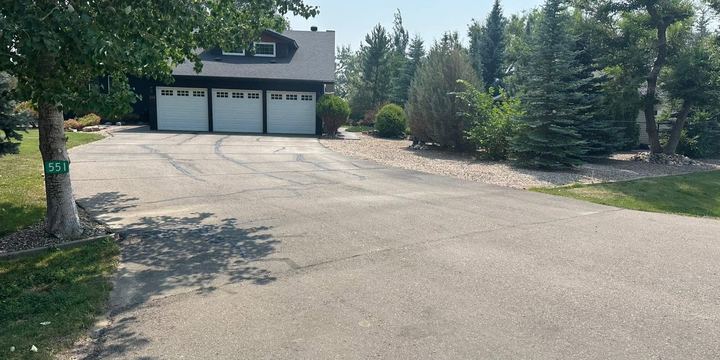
A maintenance schedule for a commercial lot
Lots fail slowly then suddenly. A realistic cycle that keeps a lot out of the replacement conversation.
Read it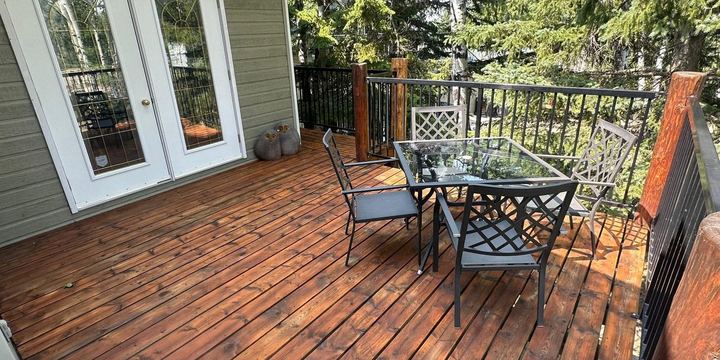
How often a deck needs refinishing in southeast Alberta sun
We get more sun than almost anywhere in Canada. What that does to a deck finish and a realistic cycle for horizontal surfaces.
Read it