


Garage floor epoxy: the prep is the whole job
Garage floor coatings fail at a remarkable rate, and almost never because of the epoxy. They fail because of what was under it.
Why a trowelled slab is the worst surface for coating
Power trowelling closes the surface of concrete, leaving it dense and smooth. That is excellent for durability and terrible for adhesion — there is nothing for the coating to key into.
What acid etching does not do
Etching kits are what most retail epoxy comes with. Acid opens the surface slightly but it is inconsistent, it does not remove contamination, and it leaves residue that must be neutralised and rinsed thoroughly. On an oil-stained garage floor it is not close to enough.
What proper preparation involves
- Contamination removal. Oil, grease and tyre marks have to be gone, not just cleaned around.
- Previous coatings removed entirely rather than scuffed.
- A mechanical profile across the whole slab — blasting or grinding, consistently.
- A moisture test. Slabs on grade without a vapour barrier will push moisture through and lift a coating regardless of how well it was prepared.
Garage floors across Ross Glen, Southridge and Crescent Heights are usually a sealed or power-trowelled slab, and epoxy will not bond to either without the profile being opened first.
Talk it through with Matt.
Call 403-702-4435 or text a photo of the job for a straight answer.
Fastest way to a number: text a photo of what needs blasting to 403-702-4435.
Keep reading.
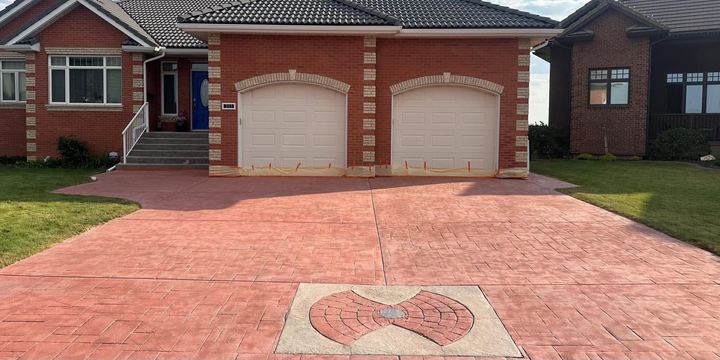
Exposed aggregate: how the finish is actually made
Blasting concrete to expose the stone is a controlled removal, not a clean. What decides how it turns out.
Read it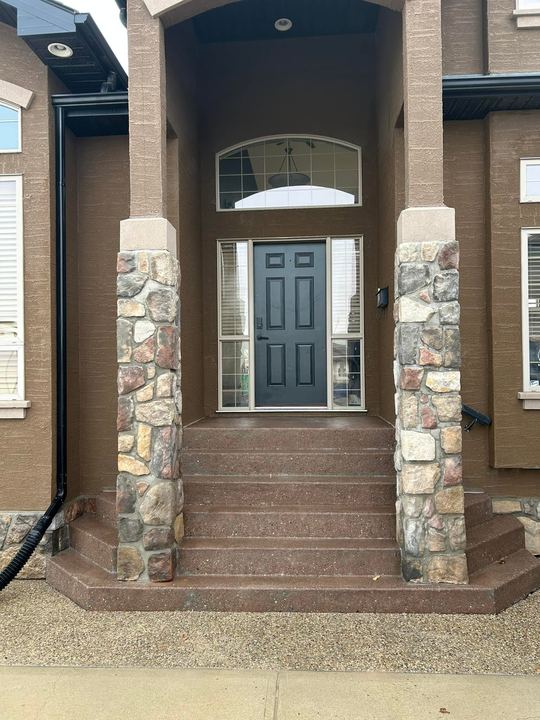
Why your concrete sealer went cloudy, and how it comes off
White blush, peeling and hazing on decorative concrete. What causes each and why recoating over it makes it worse.
Read it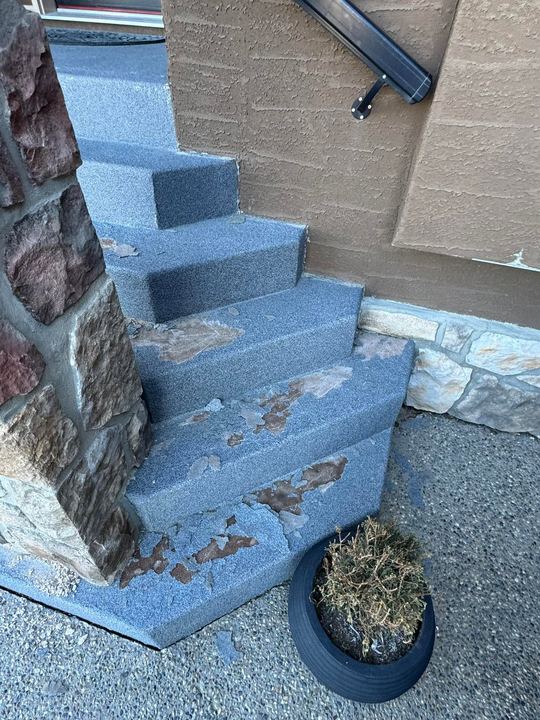
Removing parking lot lines without scarring the asphalt
Reconfiguring a lot means the old layout has to go. Grinding leaves ghosts and gouges — blasting does not have to.
Read it