


The five details on a log home that always fail first
Log walls rarely fail evenly. They fail at the details, and always the same ones.
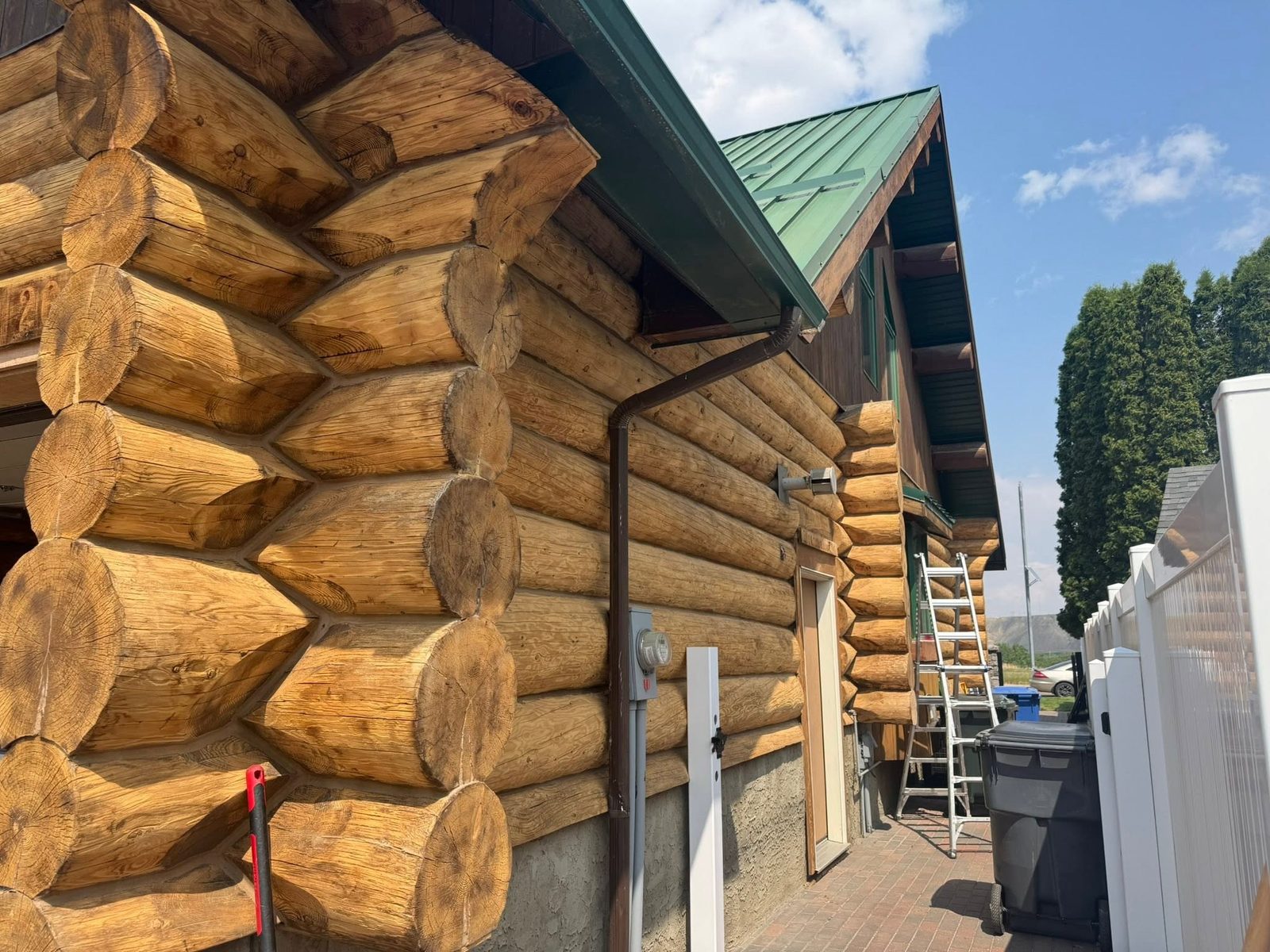
1. Log ends and corner notches
End grain absorbs water far faster than face grain. Corner notches and protruding log ends are the most exposed end grain on the building, and they are where rot starts.
2. Upward-facing checks
Checks are the natural splits that open as a log dries. Any check facing up is a channel that collects water and holds it against the interior of the log. Those want filling and sealing, not just coating over.
3. The first course
Splash-back off a deck or grade keeps the bottom log wet long after the rest of the wall has dried. It is the single most common location for serious decay.
4. Butt joints between logs
Where two logs meet in a run, movement opens the joint and the sealant works hardest. It is a small area doing a large job.
5. Under-eave transitions
The line where a protected wall meets an exposed one is where finish life changes abruptly, so failure shows as a hard edge rather than a gradual fade.
On the Cypress Hills cabins it is nearly always the corner notches and the south-facing log ends, because that is where snow sits longest into the spring and where the summer sun hits hardest once it has gone.
Talk it through with Matt.
Call 403-702-4435 or text a photo of the job for a straight answer.
Fastest way to a number: text a photo of what needs blasting to 403-702-4435.
Keep reading.
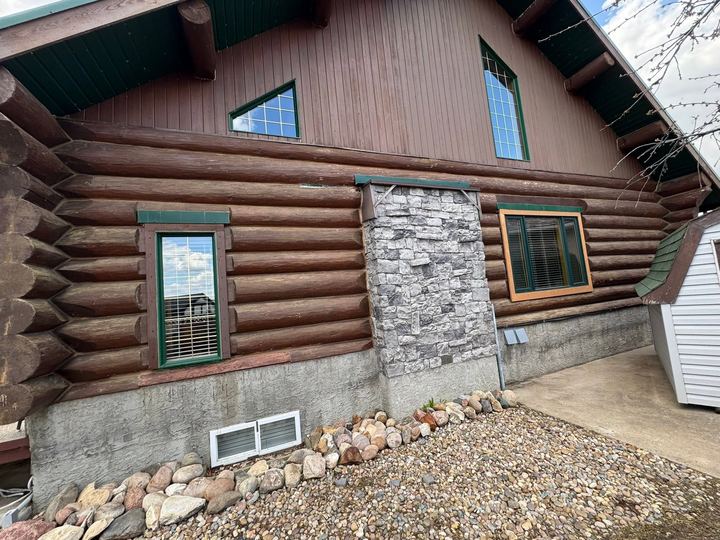
Why your log home went grey — and what stripping it actually involves
UV, not dirt, is what greys a log home. Here is what is really happening to the timber, why sanding disappoints, and how media blasting differs.
Read it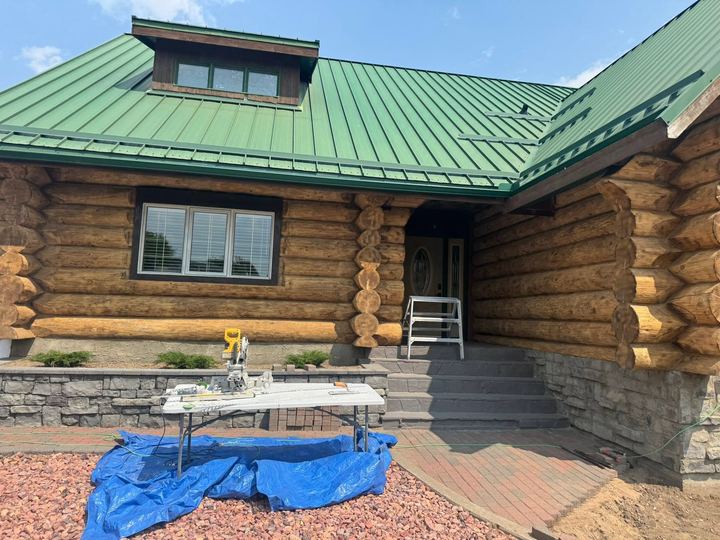
How often does a log home need re-staining in southern Alberta?
Our sun and wind are harder on a log wall than most of Canada. Here is a realistic cycle by elevation, and the signs that say do it now.
Read it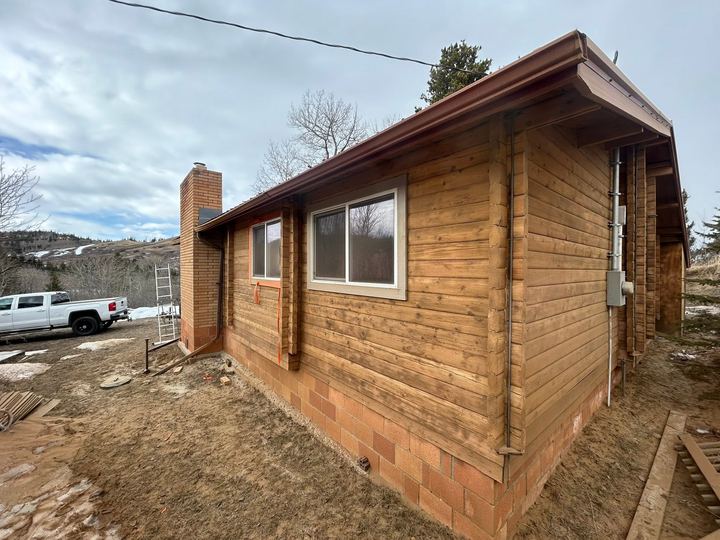
Chinking: what it does and when it has to be replaced
Chinking is the seal between your logs and the weather. Here is how to tell whether yours is tired, and how it interacts with a blast.
Read it