


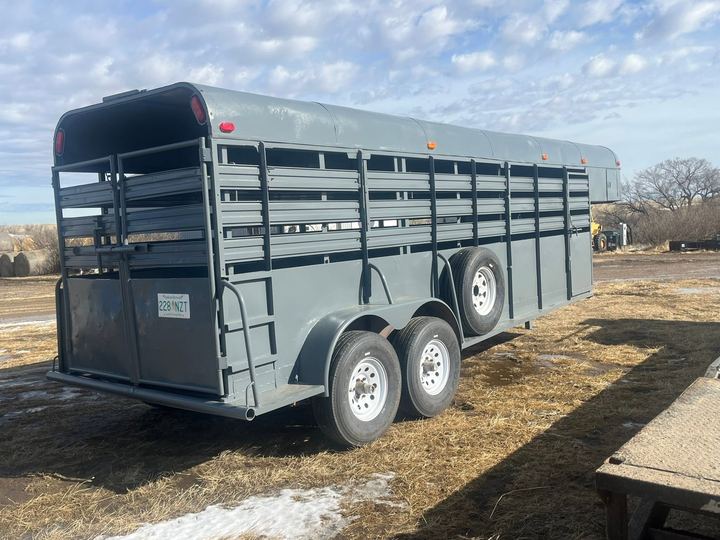
What drives the price of a log home restoration
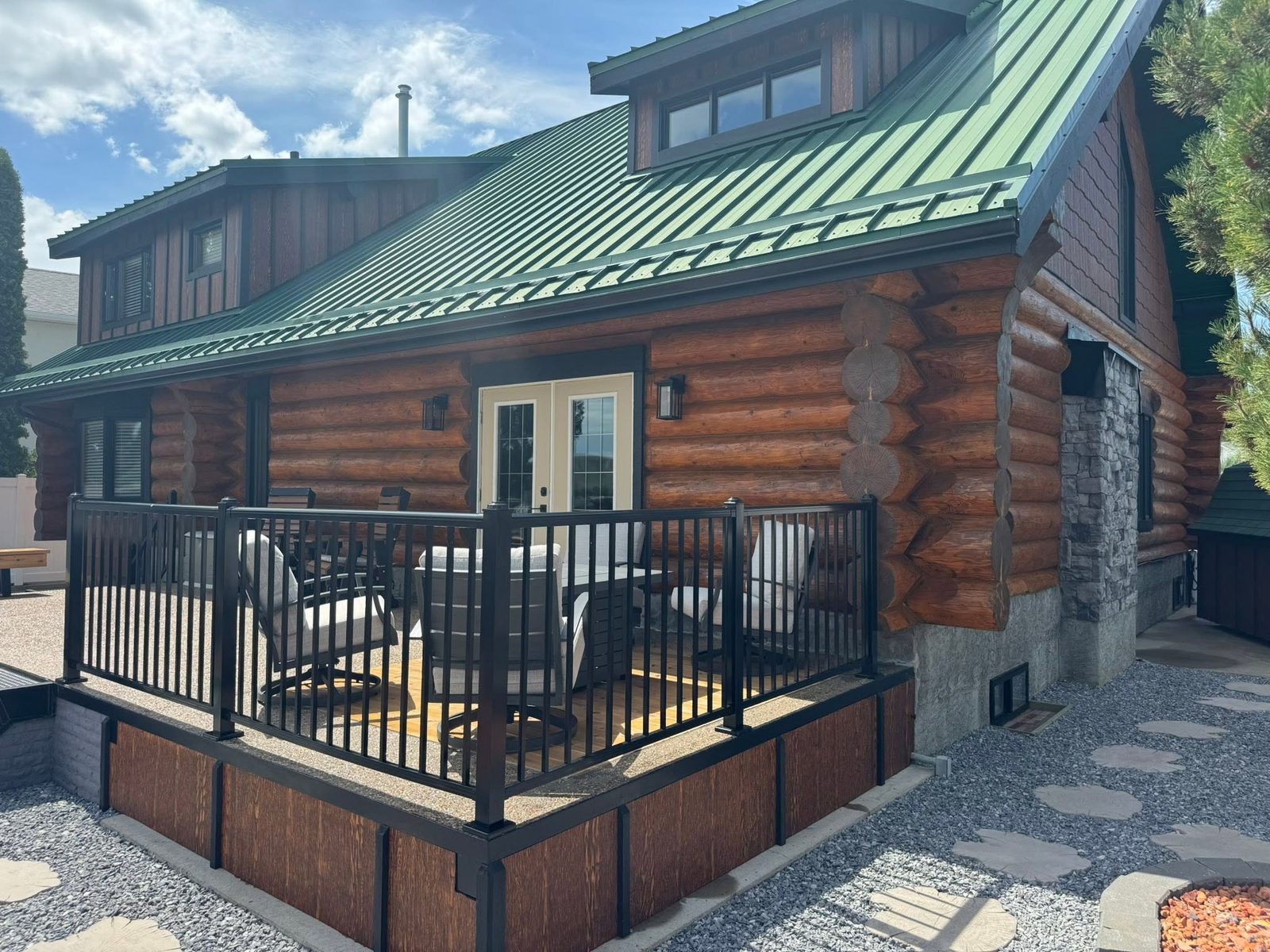
Square footage is the smallest factor. What actually moves a log home quote is what is on the wall and how hard it is to reach.
The real drivers
- What is on there now. A single failing penetrating oil comes off quickly. Three layers of film-forming stain, one of them solid-colour, is a different job entirely.
- Access. A single-storey walkout is ground work. A two-and-a-half storey gable end over a slope means staging, and staging is time.
- Log profile. Milled D-log with a flat face is fast. Hand-hewn or full-round with deep coves takes much longer per square foot.
- Condition. Sound wood strips predictably. Punky or checked logs need pressure dropped and more care.
- Masking. Windows, decks, mechanicals, gardens and anything else that has to be protected is real labour before a nozzle is opened.
What you can do to lower it
Cut back planting against the walls, clear the perimeter, move vehicles and furniture, and have decisions made about chinking and stain before we start. A yard we can work in without shuffling things costs less than one we cannot.
The cheapest log home to restore is the one caught at the right time. Waiting three more years never makes the number smaller.
Access is a genuine line item on the Elkwater and Cypress Hills cabins. A narrow treed lot with a steep approach costs more in setup and containment than the same square footage on a flat acreage near Dunmore or Seven Persons.
Talk it through with Matt.
Call 403-702-4435 or text a photo of the job for a straight answer.
Fastest way to a number: text a photo of what needs blasting to 403-702-4435.
Keep reading.
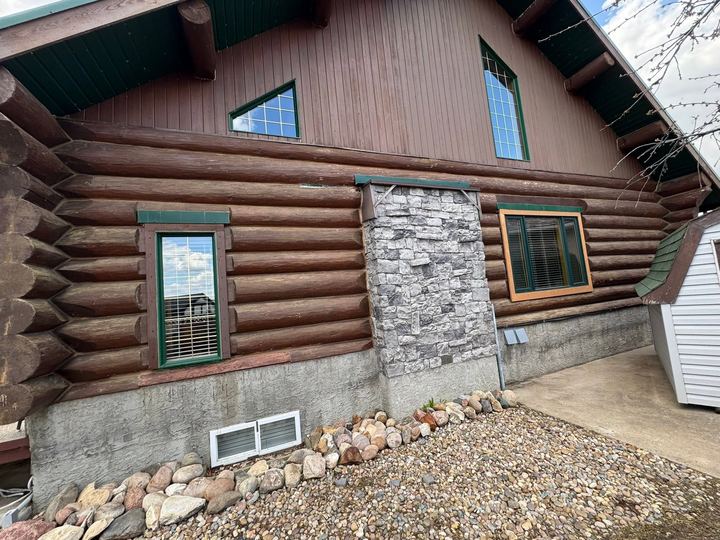
Why your log home went grey — and what stripping it actually involves
UV, not dirt, is what greys a log home. Here is what is really happening to the timber, why sanding disappoints, and how media blasting differs.
Read it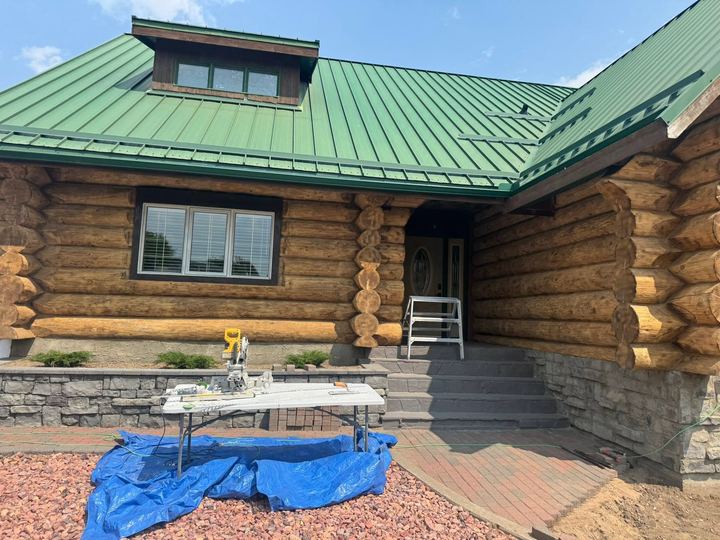
How often does a log home need re-staining in southern Alberta?
Our sun and wind are harder on a log wall than most of Canada. Here is a realistic cycle by elevation, and the signs that say do it now.
Read it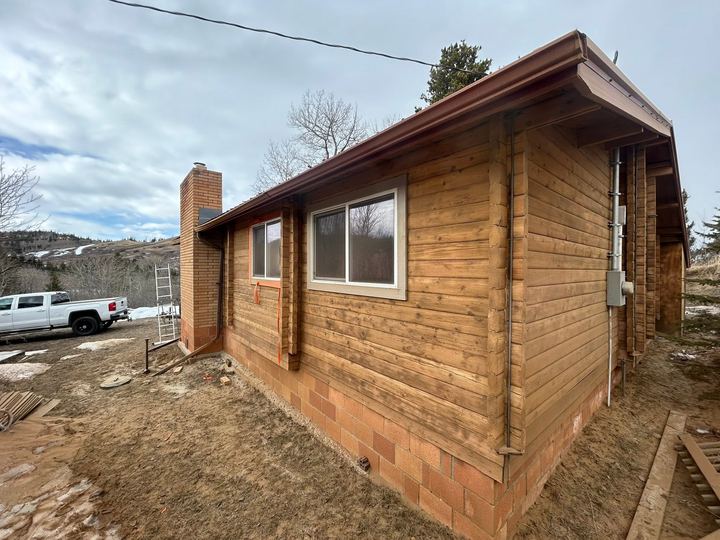
Chinking: what it does and when it has to be replaced
Chinking is the seal between your logs and the weather. Here is how to tell whether yours is tired, and how it interacts with a blast.
Read it