

Surface profile, explained without the jargon
Every industrial coating datasheet specifies a surface profile. Most people skip that line. It is the line that decides whether the coating stays on.
What profile is
Blasting does not just clean steel, it roughens it. Each particle of media leaves a tiny crater. The resulting texture — peaks and valleys across the surface — is the profile, and it is what a coating mechanically keys into.
It is measured peak-to-valley, in mils (thousandths of an inch) or microns. A typical industrial spec asks for something like 2 to 3 mils.
Why too little fails
A smooth surface gives the coating nothing to grip. Adhesion then relies entirely on chemical bond, and on steel that flexes, heats and cools that is not enough. The coating lets go in sheets rather than blistering.
Why too much also fails
An excessive profile means the peaks are taller than the coating is thick. Those high points end up with almost no coverage over them, and they are exactly where corrosion restarts. You get pinpoint rusting across an otherwise sound film.
Profile is a specification with a range, not a target to exceed. More is not better.
What controls it
Media type, media size, pressure and standoff distance. Angular media cuts a deeper profile than rounded. Bigger media cuts deeper than fine. That is why the media selection follows the coating spec rather than the other way around.
This is the specification the coating shops and fabricators in Brier Park Industrial and out in Redcliff will ask you about before anything else. If the profile is wrong, nothing applied over it performs to its data sheet.
Talk it through with Matt.
Call 403-702-4435 or text a photo of the job for a straight answer.
Fastest way to a number: text a photo of what needs blasting to 403-702-4435.
Keep reading.
SP-6, SP-10 and the standards your coating is asking for
Commercial blast, near-white, white metal. What the common cleanliness standards actually require and which one your job needs.
Read it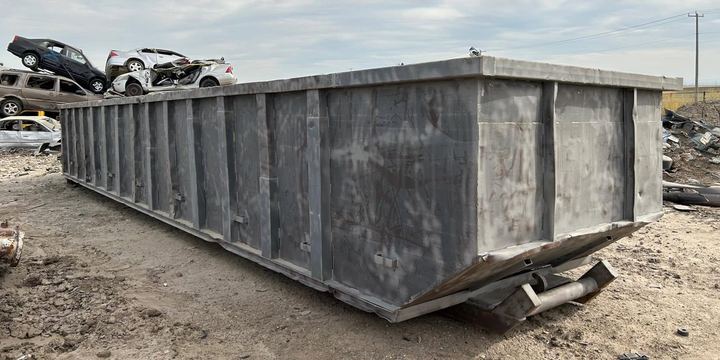
Running a roll-off bin fleet through refurbishment
Bins are the definition of a rolling maintenance problem. How to cycle a fleet through without taking the whole thing off the road.
Read it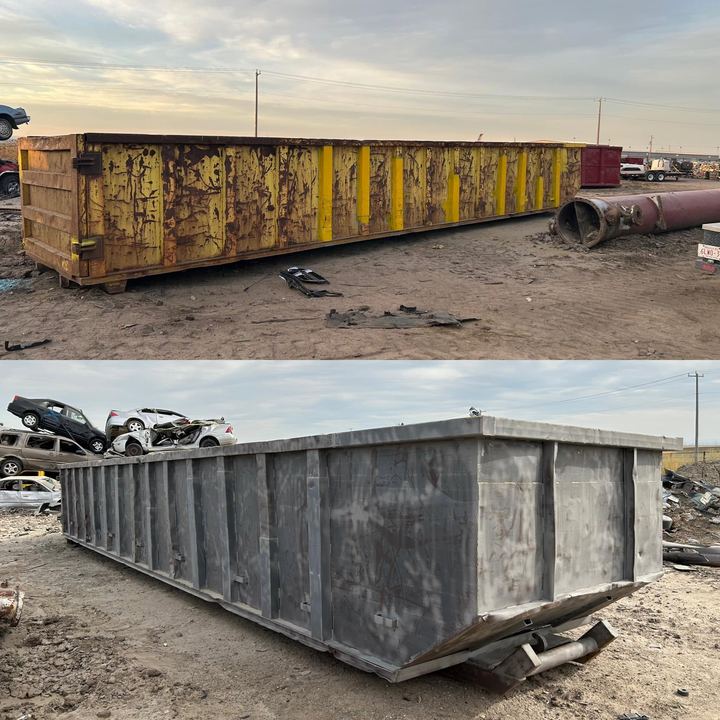
Flash rust: the clock that starts the moment we finish
Bare steel begins oxidising immediately. What flash rust is, what inhibitors do, and how to plan the gap between blast and coat.
Read it